
In today’s fast-paced sales environment, customer relationship management (CRM) systems like HubSpot have become central to driving efficiency and growth. However, the CRM market faces a persistent challenge: fragmented data and outdated information often limit the potential of these platforms. Many sales teams and revenue operations (RevOps) leaders struggle with inconsistent data across tools, resulting in wasted time, inaccurate insights, and missed opportunities. As businesses increasingly rely on artificial intelligence (AI) to power decision-making, the need for accurate, real-time data has never been more critical. This guide explores how to address these challenges by syncing data effectively within HubSpot, with a focus on solutions like Coffee, an AI-first companion app that enhances CRM capabilities as part of a broader trend toward intelligent automation.
Real-time data syncing ensures that your CRM reflects the most current customer information, enabling AI tools to deliver actionable insights. By integrating a solution like Coffee with HubSpot, sales teams can minimize manual tasks, consolidate sales intelligence, and focus on closing deals. This approach fits into a larger movement of using companion apps to bridge gaps in traditional CRM setups. Let’s dive into the specifics of why data syncing matters, how to implement it, and the tangible benefits it offers.
Why Fragmented Data Hinders Your HubSpot CRM
Fragmented data creates inefficiencies that impact sales performance. When systems don’t communicate, customer information becomes incomplete, leading to unreliable reporting and poor decision-making. Sales reps often juggle multiple platforms, spending only about 35% of their time on actual selling due to administrative burdens like manual data entry.
The cost of poor data synchronization extends beyond time. Inaccurate pipeline forecasts can lead to misallocated resources and missed revenue goals. As teams grow and data sources multiply, the effort required to reconcile information manually becomes a significant expense. Addressing these issues starts with understanding the root causes and implementing a streamlined process for data management.
Steps to Prepare HubSpot for Effective Data Syncing
Before introducing real-time data syncing, it’s important to build a strong foundation. A well-prepared CRM ensures that syncing improves data quality rather than spreading existing problems across systems. Here are the key steps to follow.
Step 1: Map Out Your Data Sources and Tools
Begin by identifying all tools that interact with HubSpot, such as email platforms, data enrichment services, and scheduling apps. List both formal integrations and unofficial data flows, like spreadsheets or notes where reps store customer details outside the CRM. Note how often data updates, which fields are shared, and any manual workarounds. This process highlights gaps in your current setup and clarifies where syncing can make the most impact.
Step 2: Clean Up Existing HubSpot Data
Starting with accurate data prevents syncing from duplicating errors. Use HubSpot’s built-in features to identify and merge duplicate records. Standardize formats for fields like names and contact details to avoid mismatches. While this step can be time-consuming, especially for CRMs with years of data, it lays the groundwork for reliable syncing and better outcomes down the line.
Step 3: Set Clear Data Governance Rules
Decide which system holds the most accurate version of specific data types. For example, designate your email tool as the primary source for communication logs. Establish consistent naming and entry guidelines for contacts, deals, and other records. Outline how to resolve conflicts if data discrepancies arise during syncing. These rules keep your CRM organized and trustworthy as data flows in real time.
How to Implement Real-Time Data Syncing with Coffee
With preparation complete, it’s time to integrate a tool like Coffee to enable real-time data syncing with HubSpot. As an AI-driven companion app, Coffee offers advanced automation that enhances CRM functionality. Here’s how to set it up.
Step 4: Select Coffee for Enhanced Syncing
Coffee stands out as a practical option for bi-directional data syncing with HubSpot. It automates the creation and updating of contacts and companies by pulling information from emails and calendar events. Beyond basic data transfer, its AI processes and enriches information, logging activities directly into HubSpot without manual input. Coffee also stores historical pipeline data, enabling detailed analysis and strategic planning.
Ready to unify your data in HubSpot? Request access to Coffee and explore its capabilities.
Step 5: Connect Coffee to Your HubSpot Account
Integrating Coffee with HubSpot is straightforward. The setup process involves authenticating the connection to link Coffee with your CRM portal. Once connected, it pulls data from HubSpot and other platforms like Google Workspace or Microsoft 365 to establish a synced baseline. Users can choose which enriched data flows back into HubSpot, maintaining control over workflows. Coffee adheres to strict security standards, including SOC 2 Type 2 and GDPR compliance, to protect information during syncing.
Step 6: Customize Real-Time Data Updates
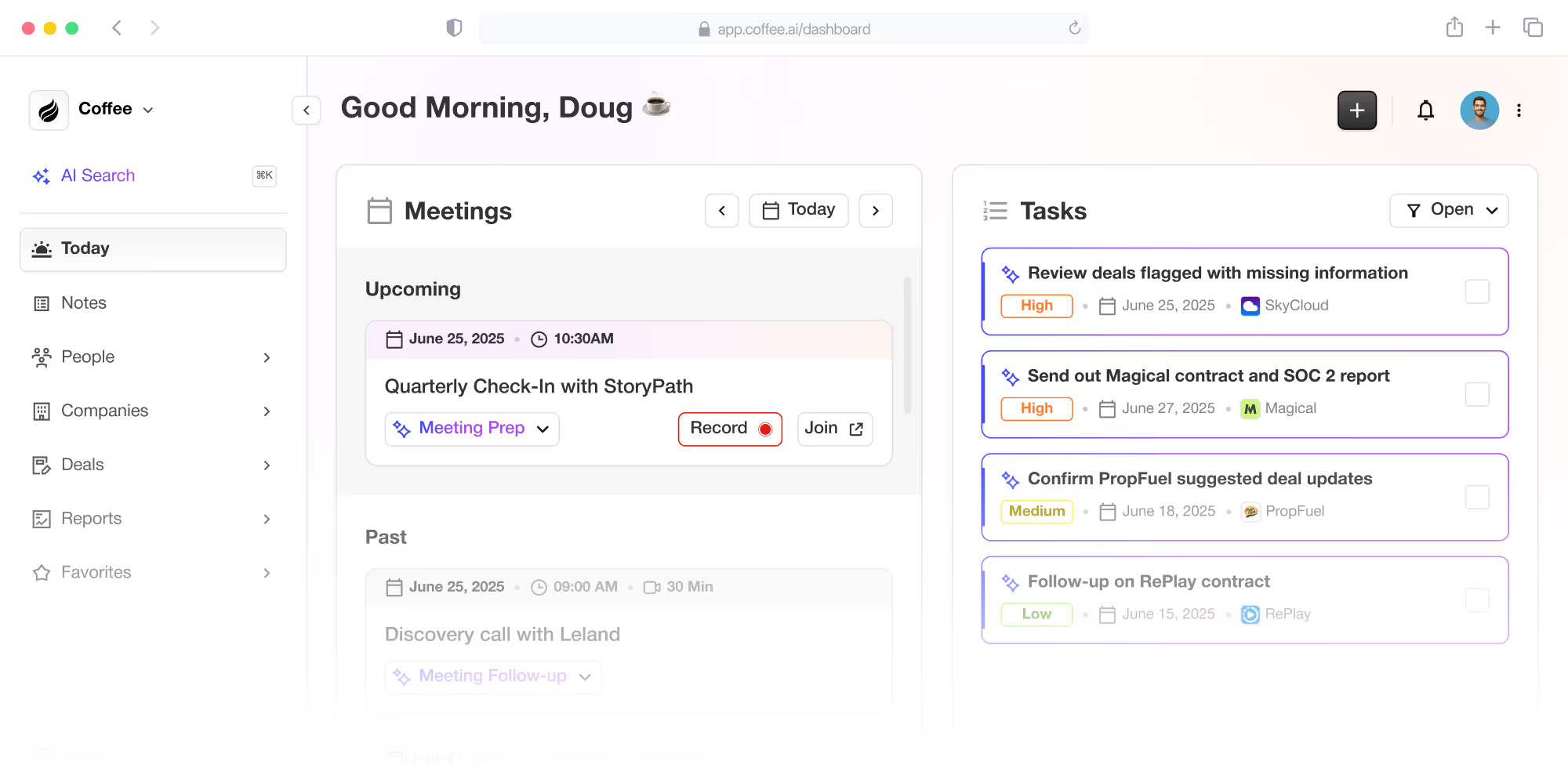
Prioritize syncing critical data points such as contacts, companies, deal statuses, and activity records. Coffee’s AI captures customer interactions instantly, including generating summaries from meetings or transcribing calls on platforms like Google Meet. It also continuously updates records with details like job titles or company information, keeping HubSpot current without extra effort. This automation saves sales reps an estimated 8 to 12 hours per week on data entry tasks.
Benefits of Unified Data for AI-Powered Insights
Syncing data in real time with a tool like Coffee turns HubSpot into a dynamic sales platform. Current, comprehensive data enhances AI capabilities, leading to better analytics and automation.
Boosting Sales Performance with Actionable Insights
Complete and up-to-date data allows HubSpot to spot trends and opportunities more accurately. Coffee captures detailed interaction histories, enabling AI to suggest timely follow-ups and personalized engagement strategies. This shifts sales efforts from reactive to proactive, helping teams stay ahead of customer needs.
Improving Pipeline Visibility and Strategy
Coffee provides a feature called Pipeline Compare, which offers insights into weekly changes in deal progression. Teams can see which deals have moved forward, stalled, or been added, turning pipeline reviews into data-driven conversations. This level of visibility supports more effective planning and resource allocation.
Advanced Features for CRM Optimization with Coffee
Once real-time syncing is active, Coffee offers additional tools that provide a competitive edge over standard CRM configurations.
One feature is the list builder, which lets users create targeted prospect lists using simple language queries. For example, you can search for sales VPs at companies of a specific size in a chosen region. Another tool prepares reps for meetings by summarizing attendee backgrounds and past interactions, improving preparation and outcomes.
Interested in elevating your sales process? Request access to Coffee for smarter HubSpot integration.
| Feature | Coffee + HubSpot | HubSpot Stand-Alone | Traditional CRM Systems |
|---|---|---|---|
| Data Entry Automation | AI-driven, saves 8-12 hours weekly | Basic, often requires manual updates | Fully manual, prone to errors |
| Real-Time Syncing | Bi-directional and immediate | Limited to specific apps, often delayed | Batch updates, rarely current |
| Data Enrichment | Integrated and automatic | Needs external tools | Manual and inconsistent |
| Pipeline Analysis | AI-enhanced with historical comparisons | Standard reports without trends | Relies on spreadsheets |
Key Questions About Data Syncing with Coffee Answered
How does syncing with Coffee improve sales forecasting in HubSpot? Real-time data ensures forecasts are based on the latest deal progress and interactions. This leads to more accurate predictions, helping teams plan resources with confidence.
Does Coffee eliminate the need for separate data enrichment tools? Yes, it includes built-in enrichment capabilities, updating records with details like job roles or company updates, reducing the reliance on additional software.
What value does Coffee bring to mid-sized HubSpot users? It automates routine tasks and provides AI-driven insights without requiring a full CRM overhaul. This saves time for reps and simplifies the tech stack with better pipeline visibility.
How does Coffee handle unofficial data sources outside HubSpot? It automatically pulls data from emails, calendars, and calls to create records in HubSpot, reducing reliance on external spreadsheets or notes and keeping the CRM up to date.
What security practices does Coffee follow for data syncing? Coffee complies with SOC 2 Type 2 and GDPR standards, using encryption for data transfers and storage. It also offers admin controls to manage access and protect customer information.
Conclusion: Maximize HubSpot’s Potential with Real-Time Syncing
Data silos and manual processes no longer need to limit your CRM’s effectiveness. Tools like Coffee, as part of a wider trend in AI-enhanced automation, help turn HubSpot into a powerful asset for sales growth. By syncing data in real time, you gain accurate forecasts, deeper pipeline insights, and more productive teams with minimal manual effort.
Don’t let outdated data slow you down. Enhance HubSpot with intelligent syncing solutions. Request access to Coffee today and take the first step toward a more efficient sales process.