Written by: Doug Camplejohn, CEO & Co-Founder, Coffee | Last updated: July 22, 2026
Key Takeaways for a Continuously Clean Pipeline
- Continuously clean pipeline data means every open Salesforce opportunity has accurate fields, a logged next step, recent activity, and a realistic close date updated in near-real time.
- Validation rules and automated Flows enforce mandatory fields, detect stale deals, and auto-close opportunities that lack activity or next steps.
- A pipeline freshness dashboard with reports on stalled deals, overdue close dates, and owner-level freshness rates makes data quality visible without manual audits.
- Forecast-ready criteria require Amount, Close Date, Next Step, Contact Role, recent activity, and mapped forecast categories to be present before any opportunity advances.
- Teams can eliminate manual data-entry burden and keep Salesforce pipeline data continuously clean by automating their pipeline updates with Coffee.
Prerequisites for a Forecast-Ready Salesforce Pipeline
Confirm these prerequisites before configuring any Flow or validation rule so the system works as designed from day one.
- Salesforce System Administrator access to create validation rules, Flows, and custom reports
- Documented opportunity stage definitions with entry and exit criteria for each stage
- An existing activity-logging mechanism (Einstein Activity Capture, a third-party sync, or manual task creation)
- A defined set of forecast categories mapped to every active opportunity stage
- Stakeholder alignment from sales leadership, RevOps, and at least one rep on what “forecast-ready” means before any rule enforces it
- A baseline data-quality report showing current completeness rates on Amount, Close Date, Next Step, and Primary Contact Role fields
Step 1: Enforce Mandatory Fields with Stage-Gate Validation Rules
Validation rules form the first enforcement layer and stop reps from advancing an opportunity unless required fields are populated. The criteria below cover the five most forecast-critical fields.
Amount: Block stage advancement past Discovery if Amount is blank or zero.
AND(ISPICKVAL(StageName, "Proposal"), Amount = 0)
Close Date: Reject any close date set in the past on open opportunities.
AND(NOT(ISPICKVAL(StageName, "Closed Won")), NOT(ISPICKVAL(StageName, "Closed Lost")), CloseDate < TODAY())
Next Step: Require a populated Next Step field before moving past Discovery.
AND(ISPICKVAL(StageName, "Proposal"), ISBLANK(NextStep))
Primary Contact Role: Block Proposal stage if no Contact Role is associated. Use a cross-object formula or a separate Flow that checks OpportunityContactRoles count equals zero.
Stage Progression: Prevent skipping stages by validating that the prior stage was completed. Use a custom checkbox field such as Discovery_Complete__c set by a Flow when exit criteria are met, then validate its presence before allowing advancement.
Troubleshooting callout: Over-restrictive rules can block legitimate edge cases such as a renewal deal where Amount is confirmed verbally but not yet documented. Create an admin-controlled bypass field such as Validation_Override__c that a manager can check to allow the save, and audit its use monthly.
Step 2: Automate Activity Capture from Email and Calendar
Validation rules tied to stage changes enforce required data at the point of progression, but they do not log the activity that proves a deal is alive. Automated capture fills that gap and keeps activity data current.
Native option: Einstein Activity Capture (EAC). Connect Google Workspace or Microsoft 365 in Setup → Activity Settings → Einstein Activity Capture. EAC syncs emails and calendar events to opportunity and contact records automatically. Note that activities captured by EAC are not stored as standard Salesforce Task or Event records, which restricts standard reporting and Flow automations.
Third-party option. Tools that write native Task and Event records to Salesforce preserve full Flow and reporting compatibility. Evaluate any third-party sync on whether it writes to standard objects before purchasing.
Decision point. If your stale-deal Flows in Step 3 rely on LastActivityDate or task counts, native Task and Event records are required. If EAC is your only option, supplement it with a custom Last_Synced_Activity__c date field updated by a scheduled Flow that reads EAC activity data via the ActivityMetric object. With activity capture configured to populate activity dates automatically, you can now use that data to detect and resolve stale deals.
Step 3: Build Stale-Deal Detection and Auto-Close Flows
A stale deal is defined as one that has been in its current stage longer than 1.5× the average duration for that stage and has no logged activity in the past 14–21 days. Two scheduled Flows enforce this definition automatically.
Flow 1: 14-Day No-Activity Alert
- Trigger: Scheduled, runs daily at 6:00 AM.
- Filter:
IsClosed = FALSEandLastActivityDate < TODAY() - 14. - Action: Create a Task assigned to the opportunity owner with subject “No activity in 14 days — update required” and set
ActivityDateto today plus two days.
Flow 2: 30-Day No Next Step Auto-Close
- Trigger: Scheduled, runs weekly on Monday.
- Filter:
IsClosed = FALSE,ISBLANK(NextStep), andLastActivityDate < TODAY() - 30. - Action: Update
StageNameto “Closed Lost” and populateDescriptionwith “Auto-closed: no next step or activity for 30+ days”.
Troubleshooting callout: Flows that filter on IsClosed = FALSE will not fire on Closed Won records, but still confirm this filter is present before activating. Test in a sandbox with a Closed Won record and verify that the Flow exits at the filter step without updating the record.
Step 4: Create a Pipeline Freshness Dashboard in Salesforce
A freshness dashboard makes data quality visible and replaces manual audits with always-on monitoring. Build these reports in Salesforce and pin them to a shared RevOps dashboard.
Report 1: Freshness Rate by Owner. Filter for opportunities with IsClosed = FALSE, grouped by Owner, with a formula column: (Count of records where LastActivityDate >= TODAY()-14) / Total Count × 100. Freshness Rate is calculated as (Records with Date in Freshness Window / Total Records) × 100 and serves as the headline KPI. Target 70% or above.
Report 2: Stalled Opportunity Flag. Filter for opportunities with IsClosed = FALSE, LastActivityDate < TODAY()-14, and ISBLANK(NextStep). Use a horizontal bar chart by Stage to surface which stages accumulate the most stalled deals.
Report 3: Week-over-Week Pipeline Change. Use Salesforce historical trending on the Opportunity object (enable in Setup → Historical Trending). Track Amount and StageName changes over the prior seven days. Use a stacked column chart showing added, progressed, slipped, and closed deals.
Report 4: Overdue Close Date Count. Filter for opportunities with IsClosed = FALSE and CloseDate < TODAY(). Any non-zero count here indicates validation rules are not firing correctly or were bypassed.
Step 5: Define and Enforce “Forecast-Ready Opportunity” Criteria
An opportunity becomes forecast-ready only when all of the following conditions are true at the same time. Use this table as a reusable checklist for weekly pipeline reviews and as the enforcement target for the validation rules in Step 1.
| Field or Behavior | Minimum Requirement | Enforcement Method | Disqualifies from Forecast If |
|---|---|---|---|
| Amount | Greater than $0; within ±50% of segment average deal size | Validation rule on stage advancement | Blank or $0 |
| Close Date | Future date; within current or next quarter; consistent with average sales cycle | Validation rule; automated weekly flag for past close dates | In the past or more than two quarters out without VP override |
| Stage | Mapped to a named forecast category; not in a default “Pipeline” catch-all | Every active stage must map to a forecast category | Unmapped stage or stage skipped without exit criteria met |
| Next Step | Populated; dated within 14 days; buyer-confirmed | Validation rule; pipeline hygiene score penalizes missing next steps | Blank or date is in the past |
| Primary Contact Role | At least one Contact Role assigned with economic buyer or champion designation | Flow check on Contact Roles object; key stakeholders are a minimum data requirement | Zero Contact Roles on record |
| Recent Activity | At least one logged activity (email, call, or meeting) within the past 14 days | Stale-deal Flow alert; 70%+ of deals should show activity in the last 14 days | No activity in 14+ days regardless of stage |
| Forecast Category | Set to Commit, Best Case, or Pipeline; never omitted or defaulted | Cumulative rollup preferred; manager override available without changing stage | Null or mapped to Omitted |
| Qualification Signal | Buyer’s confirmed problem, decision timeline, and budget range documented in Description or custom fields | Deal must answer: last buyer action, committed next step, and specific close rationale | No documented buyer engagement or qualification data |
Step 6: Run a Lightweight Weekly Governance Cadence
The Flows and dashboard from Steps 3 to 5 reduce weekly governance to a focused 15-minute review instead of a 90-minute pipeline call.
- Open the Pipeline Freshness Dashboard every Monday morning before any other pipeline activity.
- Review the Stalled Opportunity Flag report. Any deal flagged here has already received a rep-facing task from Flow 1. Confirm the task was completed or escalate if it was dismissed without an update.
- Next, review the Overdue Close Date Count to catch validation rule bypasses. A non-zero number here means deals are slipping through your enforcement layer and require immediate investigation.
- Finally, check the Freshness Rate by Owner. Any owner below the target threshold receives a direct message, not a team-wide email, with a link to their specific stalled deals.
- Log the week’s Freshness Rate in a shared tracking sheet to build a trend line. Track trends in KPIs rather than only one-time audit counts to measure quality over time.
Scaling the Framework for Small and Mid-Market Teams
Smaller teams with fewer than 10 reps and a single sales motion can apply lighter thresholds without losing control. Extend the no-activity alert from 14 to 21 days, require only Amount and Close Date at stage gate, defer Next Step enforcement until Proposal, and run the governance cadence every other week.
Mid-market teams running multiple motions such as new business, expansion, and renewal need motion-specific stage gate validation rules. Use a custom Opportunity_Type__c picklist field as a condition. Renewal opportunities, for example, may legitimately carry a close date set 90 days out with no recent outbound activity, so a separate rule set prevents the stale-deal Flow from auto-closing them prematurely. A healthy pipeline coverage ratio of 3× to 5× quota should be tracked separately per motion, not blended, to preserve forecast integrity across segments.
Manual vs. Agent-Driven Pipeline Management
The six steps above represent the maximum achievable outcome from a human-governed system. The table below compares that ceiling with an agent-driven approach where data capture, field updates, and stale-deal detection run autonomously.
| Approach | Weekly Hours Recovered Per Rep | Data-Quality Outcome | Forecast Accuracy Impact |
|---|---|---|---|
| Fully manual (no automation) | Reps lose 5.5 hours/week to manual CRM updates | 76% of organizations report less than half of CRM data is accurate and complete | Lower forecast accuracy at higher data decay rates |
| Manual with Flows and validation rules (this guide) | Pipeline automation reduces manual CRM data entry by 4-6 hours per rep per week | One 12-rep SaaS sales team improved pipeline data accuracy from 58% to 91% by automating HubSpot CRM data entry | Improved by enforcing forecast-ready criteria at stage gates; human entry still required for unstructured data |
| Agent-driven (autonomous capture and enrichment) | Teams using autonomous capture report saving additional hours per rep per week beyond Flow-only automation | High percentage of activity auto-logged with no manual entry required | Organizations with high data readiness often achieve higher forecast accuracy |
The manual-with-automation row represents the practical ceiling for a human-governed system, because reps still decide what gets logged from calls, emails, and meetings. Agent-driven systems remove that dependency by reading unstructured sources such as email threads, call transcripts, and calendar events and writing structured field values directly to Salesforce without rep involvement.
Move to autonomous pipeline management with Coffee to transition from the middle row to the bottom row without replacing Salesforce as your system of record.
Frequently Asked Questions
How long does initial setup typically take?
A focused RevOps admin can complete the validation rules, two scheduled Flows, and the freshness dashboard in two to three business days, assuming opportunity stages and forecast categories are already defined. Stakeholder alignment on forecast-ready criteria, which most teams underestimate, typically adds another three to five business days of internal discussion. Plan for a two-week total implementation window, including sandbox testing and a soft launch with one rep cohort before rolling out org-wide.
What maintenance is required after the Flows are live?
Scheduled Flows need a quarterly review to confirm that inactive-day thresholds still match your current average sales cycle length, which shifts as your market or product mix changes. Validation rules should be audited whenever a new opportunity stage is added or renamed, because unmapped stages can silently bypass existing rules. The freshness dashboard requires no structural maintenance once built, but the Freshness Rate target, with 70% as the recommended baseline here, should be reviewed annually and tightened as the team matures. The most common ongoing maintenance task is reviewing the admin bypass field usage log monthly to catch reps or managers using overrides as a workaround rather than fixing underlying data issues.
How does the process handle security and compliance requirements?
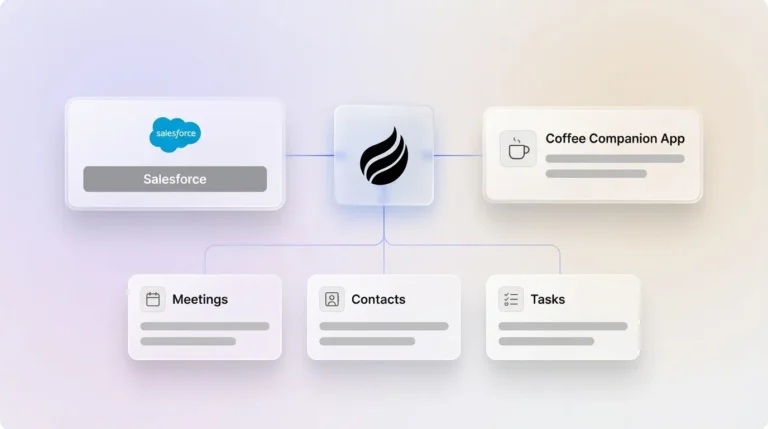
All components described in this guide, including validation rules, Flows, and reports, operate entirely within your existing Salesforce org and inherit its permission model, field-level security settings, and sharing rules. No data leaves Salesforce. If you add a third-party activity capture tool, verify that it is SOC 2 Type 2 certified and that its data processing agreement covers your industry’s requirements before connecting it to production. Coffee, as a Companion App layer on top of Salesforce, is SOC 2 Type 2 and GDPR compliant and does not use customer data to train public models. For teams in regulated industries, confirm that any automated field writes from an agent or sync tool are logged in Salesforce’s Field Audit Trail, which requires a separate license add-on.
How does the operating system evolve as the team grows?
The framework is additive by design and grows with your team. Small teams start with two validation rules and one scheduled Flow. Mid-market teams layer in motion-specific rule sets, additional freshness metrics, and role-hierarchy-aware forecast rollups. The governance cadence scales from bi-weekly to weekly as deal volume increases. The structural limit of a human-governed system is headcount, because as the number of reps and deals grows, the time required to chase missing data grows proportionally. The sustainable evolution path is to replace the human data-entry layer with an autonomous agent that captures activity from email, calendar, and call transcripts and writes it directly to Salesforce fields, while the validation rules and Flows built here remain as quality gates on top of agent-written data.
Conclusion: Make Clean Salesforce Pipeline Data the Default
The six-step framework above, which includes mandatory field validation, automated activity capture, stale-deal Flows, a freshness dashboard, forecast-ready criteria enforcement, and a 15-minute weekly cadence, represents the most a human-governed Salesforce instance can reliably deliver. It removes the most common failure modes such as missing fields, zombie deals, and overdue close dates that inflate pipeline and corrupt forecasts.
The remaining bottleneck is the human data-entry layer itself. Only 45% of sales organizations report that their leaders have high confidence in forecasting accuracy, and only 18% of organizations rate pipeline management and forecasting as a strength, despite significant annual CRM investment. The gap between those numbers and what this framework can achieve closes only when the “data in” process is handled by an agent, not a rep.
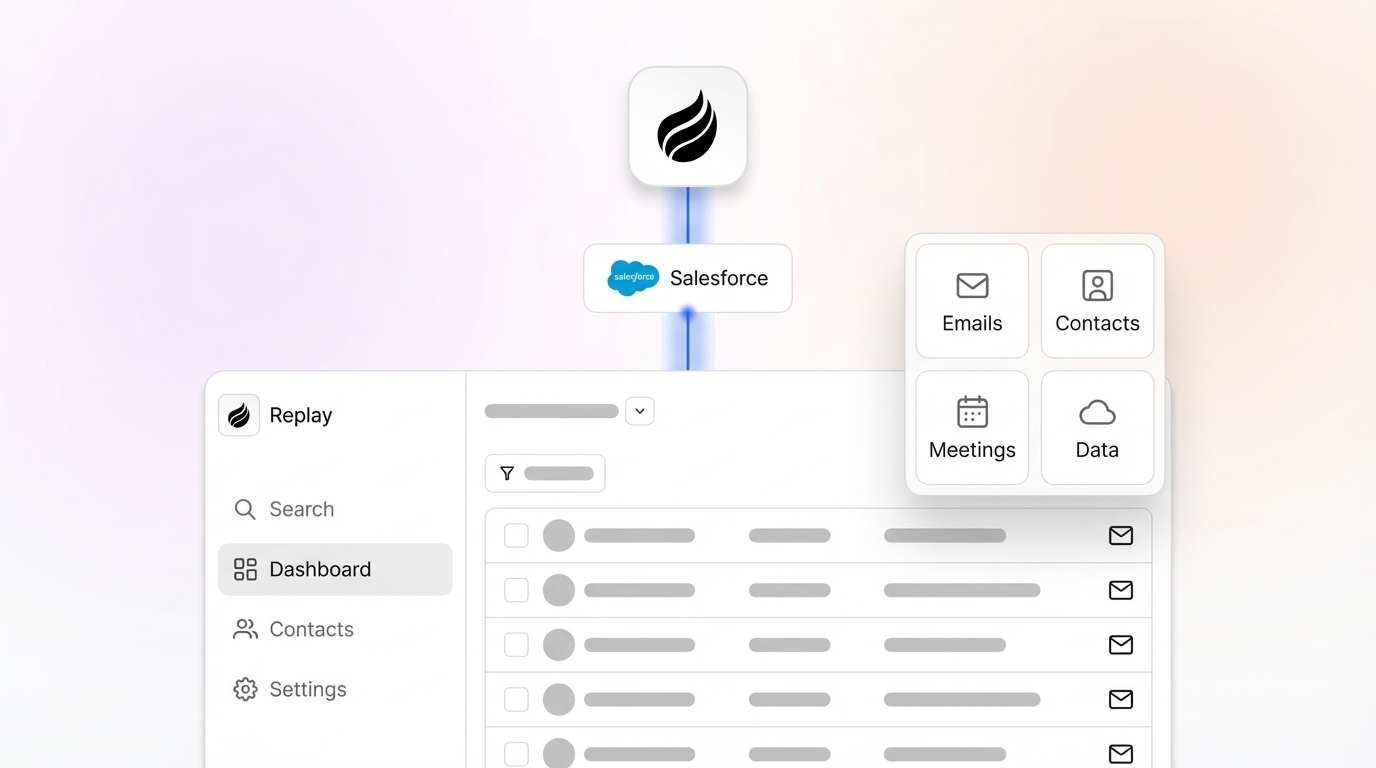
Coffee’s Companion App deploys an autonomous agent on top of your existing Salesforce instance. It captures emails, calendar events, and call transcripts, writes structured field values directly to opportunity records, and keeps every deal forecast-ready without requiring a single manual update from your team. The validation rules and Flows you build here become quality gates on top of agent-written data, not workarounds for missing it.
Make clean pipeline data your permanent default with Coffee and eliminate manual Salesforce updates for your team.