Written by: Doug Camplejohn, CEO & Co-Founder, Coffee
Coffee’s Agentic CRM: Key Takeaways
- AI agents turn spreadsheets and legacy CRMs from crisis tools into superpowers by automating data entry that consumes 71% of sales reps’ time.
- Coffee’s Agent for CRM processes unstructured data like emails and calls, removes manual logging, and saves each rep 8 to 12 hours every week.
- Legacy systems like Salesforce struggle with modern data streams because of relational database limits, which force months of cleanup before AI can run.
- Coffee offers a Standalone CRM for growing teams and a Companion App for Salesforce or HubSpot users, so companies see ROI quickly without rip-and-replace risk.
- Revenue teams gain a strategic edge when they adopt agentic AI like Coffee’s, so get started with Coffee today to modernize operations.
How Coffee’s Agent Framework Replaces Manual CRM Work
The core idea behind Coffee centers on “Good Data In, Good Data Out” powered by autonomous agents. Traditional CRMs act like passive containers that demand constant human effort. Agentic AI behaves more like an Iron Man suit, amplifying human abilities instead of piling on extra tasks. Coffee’s Agent follows this model and works as an active teammate that processes unstructured data streams.
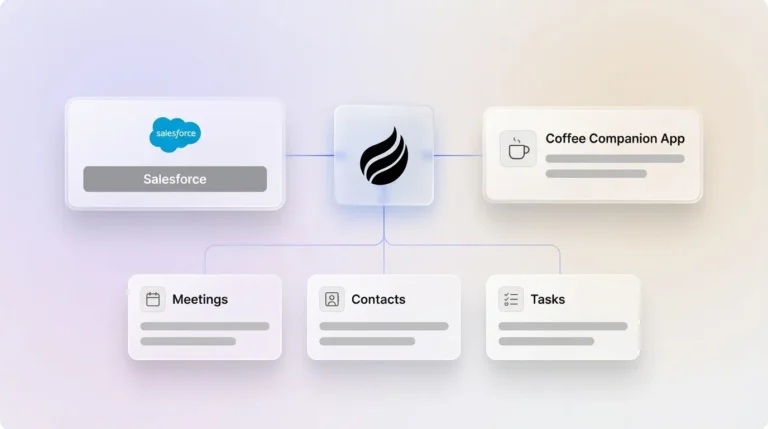
Coffee’s dual approach pairs a Standalone CRM for growing teams with a Companion App for Salesforce or HubSpot users, similar to Runway’s unified platform strategy. The Agent automatically creates contacts, enriches company records, and logs every interaction, which saves reps 8 to 12 hours per week. This shift turns sales reps from data entry clerks into focused revenue generators who spend more time selling.

Why Legacy CRM Architecture Holds Teams Back
Legacy CRMs face deep architectural limits that block them from handling modern data streams effectively. Salesforce’s multi-tenant relational database architecture relies on custom application logic to simulate normal SQL behavior, which creates rigid constraints for unstructured data such as emails and call transcripts. These legacy data issues require months of cleaning before deploying modern AI capabilities.
Market data highlights how large this transformation opportunity has become. The CRM market will reach $128.86 billion by 2031 at 7.93% CAGR, while financial planning software grows at 28.1% CAGR through 2030. Despite this spending, 20% to 70% of CRM projects fail to meet expectations, and 76% of companies blame poor tool adoption for missed quotas. Shadow CRMs spread across teams because, as Chen observed, legacy systems still feel only marginally better than spreadsheets.
Smart CRM Strategy: Build vs Buy and Agent Tradeoffs
The build versus buy decision now sits at the center of any CRM transformation plan. Coffee’s Companion approach removes rip-and-replace risk by sitting alongside existing Salesforce or HubSpot investments. This model delivers fast ROI through a 35% increase in selling time that comes from removing manual data entry work.
Change management becomes easier when reps talk to agents instead of wrestling with complex software interfaces. The conversational Explain Mode that Chen promotes turns intimidating CRM workflows into simple back-and-forth dialogue. Coffee’s warehouse-powered design keeps pipeline data accurate by preserving historical context that traditional relational databases lose when fields get updated.
Get started with Coffee to experience this agent-first approach, where software behaves like a coworker instead of a chore.
Why Coffee Represents Modern Revenue Operations Best Practice
Forward-thinking revenue leaders now view Coffee as a “post-ChatGPT agent” that mirrors Runway’s financial simulation engines and stays proactive instead of reactive. The Agent runs continuously in the background and ingests data from Google Workspace and Microsoft 365, which keeps CRM records accurate without constant human updates. Companies backed by a16z and other modern investors now “hire” agents for auto-logging so teams can reclaim time for strategic thinking.

How to Assess Readiness for Agentic CRM
Most organizations move through three maturity levels before they reach agentic CRM. Level 1 looks like spreadsheet chaos, which mirrors Chen’s COVID crisis experience. Level 2 introduces manual CRM maintenance with heavy human effort. Level 3 reaches autonomous agent management, which represents Coffee’s target state.
SMBs gain the most from Coffee’s Standalone platform, which replaces spreadsheets with an agent-powered CRM. Mid-market teams benefit from the Companion approach that layers intelligence on top of existing systems. Implementation follows a simple sequence that starts with workspace connection, continues with automated data ingestion, and finishes with pipeline comparison activation.

Common Strategic Mistakes Experienced Teams Still Make
Experienced teams often overvalue data and undervalue intuition, a pattern Chen surfaced during his Runway journey. Poor data quality grows worse when 76% of companies miss quotas because their teams never fully adopt the tools they buy. Teams also fall into the trap of ignoring unstructured data that legacy Salesforce architectures cannot process effectively.
Conclusion: Turn Spreadsheets into Superpowers with Coffee
Revenue teams unlock real leverage when they move from spreadsheets to autonomous agents that handle data drudgery and amplify human strategy. Coffee’s Agent delivers this shift by pulling good data in automatically, which allows reliable insights to flow out on a consistent basis. Get started with Coffee today and move your revenue operations from manual maintenance to durable strategic advantage.
Frequently Asked Questions
How does Coffee reimagine CRM like Runway reimagines finance?
Coffee’s Agent acts like a simulation engine for sales data and automatically turns unstructured information from emails, calendars, and call transcripts into clean CRM records. The product follows Chen’s vision for intuitive financial modeling and applies it to sales. Coffee replaces intimidating database management with natural workflow automation that matches how sales teams actually think and work.

What time savings support the 8 to 12 hours per week claim?
Coffee’s auto-enrichment and logging features remove the manual data entry tasks that consume most of the day for many teams. Market data shared by Coffee shows that 71% of sales reps feel buried by admin work. The Agent saves each rep 8 to 12 hours per week, so they can spend more time on relationships and deal progression instead of the busywork that legacy CRMs require.
Does Coffee handle unstructured data effectively?
Coffee’s Agent processes emails, call transcripts, and calendar events that traditional relational CRM architectures struggle to manage. Legacy systems often lose historical context when fields get updated. Coffee avoids this problem by storing a complete interaction history in its data warehouse, which keeps every valuable customer insight available.

Should my team choose Standalone or Companion?
Standalone fits small to mid-sized companies with 1 to 20 employees that feel constrained by spreadsheets and want an agent-powered CRM from day one. Companion works best for established teams that remain committed to Salesforce or HubSpot but need intelligent automation on top of those investments without rip-and-replace risk.
How does Coffee protect data security and compliance?
Coffee holds SOC 2 Type 2 certification and maintains GDPR compliance, which provides enterprise-grade security for customer data. The Agent processes information inside secure, encrypted environments and never uses customer data to train public AI models. This approach keeps privacy and confidentiality standards strict and predictable.