
In today’s competitive sales environment, Customer Relationship Management (CRM) systems like HubSpot are central to driving revenue and maintaining customer relationships. Yet, many organizations face a persistent challenge: low adoption rates among sales reps. The market landscape reveals a growing need for CRMs to evolve beyond static data repositories into dynamic tools that align with real-world sales processes. Research indicates that over 60% of CRM implementations fail to meet user adoption goals due to poor workflow integration and manual data burdens. This gap often results in lost opportunities and inefficient sales cycles. As AI technology advances, it offers a promising solution by automating routine tasks and enhancing CRM relevance, fitting into a larger trend of intelligent sales enablement. This article explores why sales reps resist HubSpot, outlines actionable steps to improve adoption, and highlights tools like Coffee’s Companion App as effective examples of this broader shift toward AI-driven workflow alignment.
Unpacking the HubSpot Adoption Challenge
Why Sales Reps Struggle with HubSpot
Sales reps often view HubSpot as disconnected from their daily routines. Many configurations fail to match actual sales stages or tasks, making the tool feel irrelevant. When a CRM does not reflect how a team sells, it becomes a hurdle instead of a helper, leading to incomplete data and missed opportunities.
This misalignment causes broader issues. Reps skip updates, managers lack reliable forecasting insights, and potential deals fall through unnoticed. Addressing this core disconnect is vital for improving productivity and ensuring data accuracy across the organization.
Key Barriers to CRM Use
Resistance to HubSpot goes beyond simple reluctance. Several practical barriers contribute to low adoption rates among sales teams.
- Manual data entry consumes valuable time that reps could spend closing deals, creating frustration with the system.
- HubSpot often feels like a tool built for management reporting rather than supporting daily sales tasks.
- Incomplete or outdated data in the system reduces its usefulness, perpetuating a cycle of disuse.
Overcoming these obstacles requires aligning HubSpot with real sales workflows. The following guide offers specific steps to achieve this, assuming admin access and decision-making authority to implement changes.
Steps to Align HubSpot with Sales Workflows
1. Map Out Sales Processes and Collect Feedback
Start by documenting your team’s actual sales journey from lead to close. Observe reps directly instead of relying on formal process guides. Identify where they use external tools like spreadsheets or personal apps, as these signal friction points in HubSpot.
Gather input through anonymous surveys or short interviews. Ask focused questions such as, “What frustrates you most about updating HubSpot after a call?” or “Which task would you automate if possible?” This feedback will shape customization efforts. Tools like Coffee can also track real activity patterns, revealing discrepancies between logged data and actual work.
The goal is a clear picture of where HubSpot falls short and what reps need to succeed in their daily roles.
2. Tailor HubSpot to Reflect Real Sales Stages
Adjust HubSpot to match your unique sales process. Revise pipeline stages to mirror specific steps like “Demo Scheduled” or “Proposal Review” instead of generic labels. Add custom fields that capture decision-relevant data, such as “Decision Timeline,” while avoiding unnecessary inputs that burden reps.
Set up workflows to automate follow-up tasks or stage updates based on actions. Keep customization balanced; too many required fields can overwhelm users. The result should be a system that feels intuitive and supports sales efforts directly.
3. Build Rep-Focused Dashboards
Create dashboards tailored for reps, showing daily tasks, key deal updates, and progress toward goals. Ensure visibility matches roles, with account executives seeing deal tracking and development reps viewing prospecting stats.
Allow reps to personalize their views within guidelines to encourage ownership. When reps see HubSpot as a go-to resource for their priorities, engagement rises naturally.
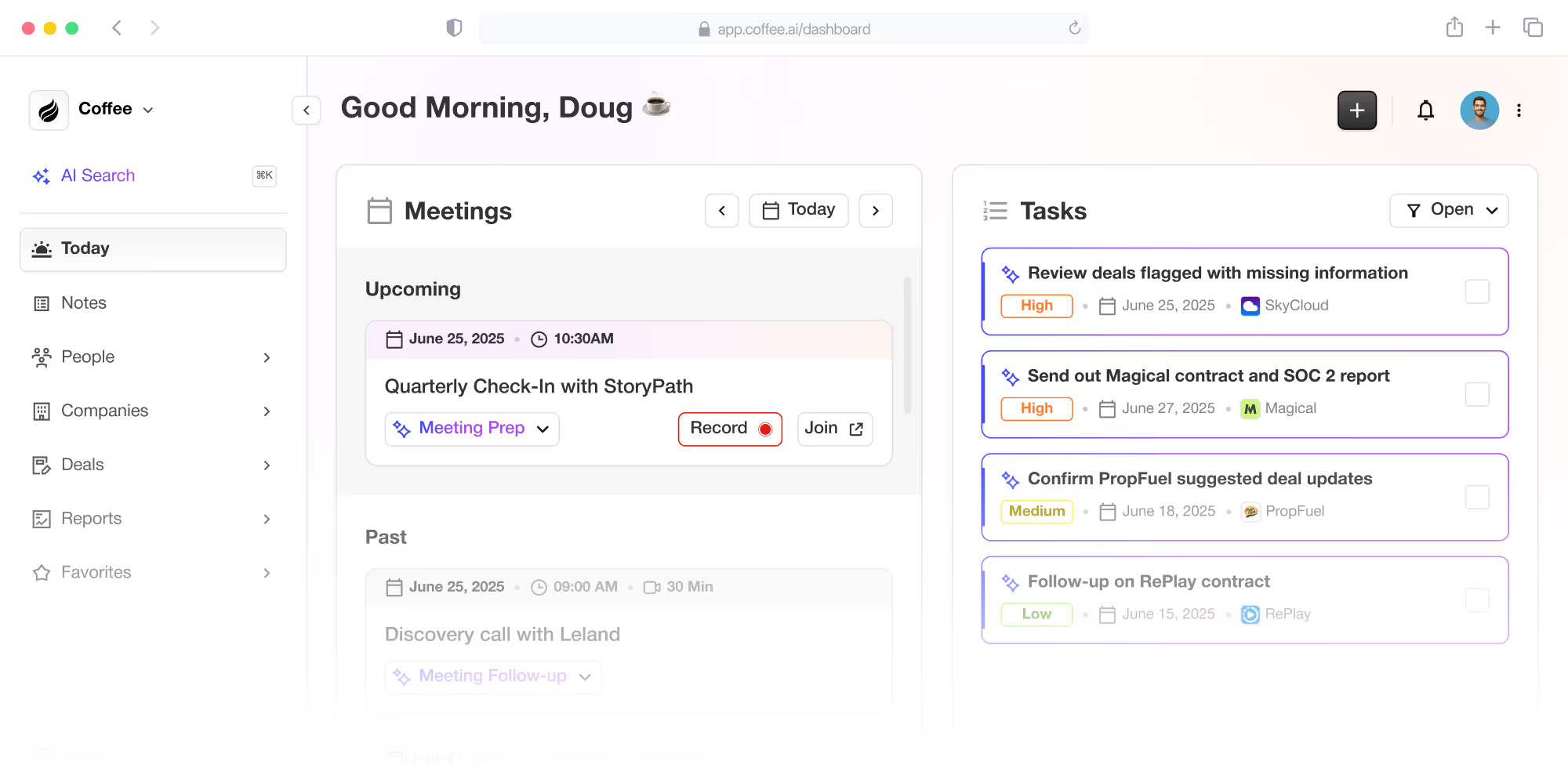
4. Cut Manual Work with AI Tools Like Coffee
Integrating AI solutions can significantly reduce data entry burdens. Coffee’s Companion App, for instance, connects with HubSpot to automate repetitive tasks, making the CRM more practical for reps.
- Automatically creates contacts and companies from emails and calendar events.
- Enriches data with job titles, company info, and LinkedIn details.
- Logs activities and updates deal statuses without manual input.
- Manages meetings by recording calls, summarizing discussions, and drafting follow-ups.
- Offers pipeline insights with week-over-week change comparisons.
This automation can save reps 8 to 12 hours weekly, freeing them to focus on selling. Request access to Coffee’s Companion App to explore how it enhances HubSpot usability.
5. Train Teams and Support Champions
Offer training focused on solving specific pain points with HubSpot’s updated setup and integrations like Coffee. Tailor sessions to roles, showing how features help daily metrics.
Identify enthusiastic users as champions to mentor peers and share tips. Avoid generic, one-time training; instead, provide ongoing micro-sessions and team check-ins. This builds confidence and creates a self-reinforcing adoption culture.
Real Impact: Coffee’s Role in HubSpot Success
A Case of Struggling Adoption
An AI solutions provider with substantial revenue faced HubSpot adoption issues. Reps relied on spreadsheets for tracking, leaving data fragmented and forecasts unreliable. Management lacked visibility, while reps felt bogged down by duplicate entry across systems.
How Coffee Enhanced Workflow
By integrating Coffee’s Companion App, the company avoided replacing HubSpot and instead amplified its value. Coffee synced with Google Workspace to capture data from emails and meetings, automating entry and enriching records. Reps worked as usual, but HubSpot now reflected accurate, useful information without extra effort.
Measurable Outcomes
- Contact creation and data accuracy improved with automation.
- Pipeline reviews became efficient with instant change insights.
- Reps trusted HubSpot more, using it proactively for updates and planning.
The result was better data quality and a stronger return on their HubSpot investment without costly overhauls.
Tracking Progress in HubSpot Adoption
Measure adoption with specific metrics to gauge impact. Track daily active users, record updates, and dashboard engagement. Check data completeness in deals and forecast accuracy. Monitor time spent on admin tasks versus sales activities, and link adoption to revenue metrics like deal cycle length.
Set baselines before changes, review monthly, and share progress with teams to sustain momentum. Consistent evaluation ensures lasting improvement.
Maintaining Long-Term CRM Engagement
After initial gains, sustain adoption with ongoing strategies. Recognize reps for quality data contributions through friendly competitions. Use regular surveys to catch emerging issues and involve reps in suggesting improvements. Expand integrations gradually, linking HubSpot to other tools for added context.
For deeper engagement, request access to Coffee’s Companion App to see AI-driven benefits in action.
Avoiding Common CRM Improvement Mistakes
Improvement efforts can falter if pitfalls are ignored. Keep customizations simple, avoiding complex fields or workflows that confuse users. Don’t mandate use without fixing workflow issues; focus on value first. Ensure mobile access works well for field reps, and invest in change management to communicate benefits clearly.
Plan data sync carefully when adding tools to prevent trust issues. Addressing these risks early ensures smoother adoption.
Benefits of Strong HubSpot Adoption
Investing in adoption yields clear returns. It cuts costs by reducing reliance on multiple tools, boosts productivity by freeing reps for selling, and improves forecasting with better data. Reps with complete customer insights also deliver better experiences, potentially increasing deal values.
Key Questions on Workflow Relevance
How Soon Will Adoption Improve?
Initial engagement and data quality often improve within 2 to 4 weeks after targeted changes. Time savings from automation are noticeable in days, though full cultural shifts may take 2 to 3 months with consistent reinforcement.
Does Coffee Add Complexity for Reps?
Coffee operates in the background, enhancing HubSpot without requiring new actions. Reps use HubSpot as usual but benefit from automatic data updates, making the CRM easier, not harder, to use.
How to Address Technology Resistance?
Show immediate value to hesitant reps by starting with early adopters who can share success stories. Highlight time savings, like cutting 8 to 12 hours of admin work weekly, and emphasize that Coffee builds on existing systems without major learning curves.
What’s the Value to HubSpot Investment?
AI enhancements increase HubSpot’s effectiveness by improving data and adoption, maximizing its potential without needing costly replacements. It turns HubSpot into an active sales tool, leveraging existing setups.
Do Small Teams Benefit?
Small to mid-sized teams gain significantly from these strategies. Without admin support, they feel manual burdens more, making automation highly impactful. Coffee scales well for solo founders to growing teams, supporting efficiency at any size.
Turning HubSpot into a Sales Ally
Low HubSpot adoption signals a need for better alignment with sales realities, not a flawed CRM. By auditing workflows, customizing setups, and using AI tools like Coffee, reps can view HubSpot as a helpful partner. This shift fits into the wider movement of making sales tools more intuitive and automated.
Adoption is a continuous effort. Keep gathering feedback and refining approaches to adapt to changing needs. The payoff is better data, higher productivity, and stronger customer interactions, all enhancing business growth.
To elevate your team’s HubSpot experience, request access to Coffee’s Companion App and see how AI can streamline sales workflows.