Written by: Doug Camplejohn, CEO & Co-Founder, Coffee
In today’s competitive sales landscape, effective data management stands as the backbone of success for any team. However, many organizations struggle with fragmented tools, manual processes, and outdated systems that slow down sales reps and impact revenue. The market for customer relationship management (CRM) solutions has evolved dramatically over the past decade, driven by the need for efficiency and actionable insights. Traditional CRMs, once seen as the standard, often fail to keep pace with modern demands, leaving gaps in productivity and data unity. This article dives into the real costs of these inefficiencies and highlights AI-powered CRM solutions, with a focus on tools like Coffee, as part of a broader trend toward automation and intelligence in sales operations.
Sales teams face increasing pressure to adopt systems that save time and deliver results. As businesses scale, the shortcomings of older CRM platforms become more apparent, from cumbersome data entry to scattered customer information. AI-driven solutions are emerging as a response, offering ways to streamline workflows and enhance performance without overloading reps. Let’s explore how inefficient systems drain resources, and how forward-thinking tools are reshaping the industry.
Why Inefficient Systems Hurt Sales Performance
Inefficient systems quietly erode sales success, affecting everything from daily tasks to long-term goals. The hidden costs impact rep morale, data quality, and revenue potential, creating obstacles that many teams struggle to overcome.
How Manual Processes Waste Reps’ Time
Sales reps often spend far too much time on administrative work instead of closing deals. Studies indicate that only about 35% of their workday focuses on actual selling, with the rest consumed by data entry and other manual tasks. This imbalance reduces productivity significantly.
Key issues include:
- Switching between disconnected tools for CRM, outreach, and call logs, which fragments focus.
- Manually updating customer records after every interaction, eating into valuable selling hours.
- Feeling frustrated with systems that seem more like a burden than a support tool.
This frustration often leads reps to create personal workarounds, such as using spreadsheets, which further undermines the central CRM’s reliability. Ready to cut down on manual tasks? Request access to Coffee’s AI CRM for a more efficient approach.
Why Fragmented Data Leads to Missed Deals
When customer data is spread across multiple platforms, sales reps lack a clear picture of their relationships. A prospect’s first contact might sit in one tool, while meeting notes and emails are stored elsewhere. This scatter makes it tough to follow a customer’s journey accurately.
Older CRM designs, often based on rigid databases, can struggle to store or retrieve historical data effectively. Without easy access to past interactions, teams miss out on insights that could improve future engagements. Fragmented information often means lost opportunities, as reps can’t act on incomplete or outdated details.
How Poor Tools Lower Sales Effectiveness
Ultimately, inefficient systems weaken a team’s ability to close deals. When tools don’t deliver reliable data or automate basic tasks, reps spend less time building relationships and more time troubleshooting. Low adoption rates compound the issue, as incomplete data in the CRM creates a cycle of reduced usefulness and further disengagement.
AI CRM: A Better Way to Manage Sales Operations
AI-powered CRM systems mark a significant shift in sales technology. These tools move beyond the limitations of manual processes by unifying data, automating repetitive tasks, and offering real-time insights. As part of this growing trend, solutions like Coffee help sales teams focus on what matters most: engaging customers and driving revenue.
What AI Brings to Sales Efficiency
AI CRMs tackle core challenges by pulling together information from emails, calendars, and calls into a single, up-to-date view of each relationship. This cuts out the guesswork caused by scattered data. They also handle routine tasks, such as logging interactions or drafting follow-ups, freeing reps to prioritize strategy over paperwork. Additionally, AI offers pipeline analytics that highlight trends and risks without requiring manual effort, giving teams a clearer path to action.
Coffee: Leading the Charge in AI-Driven Sales Tools
Among the wave of innovative solutions, Coffee stands out as a CRM built specifically for today’s sales needs. Designed with AI at its core, it focuses on reducing manual work, unifying data, and providing practical insights to improve outcomes. It serves as a strong example of how modern technology can address longstanding pain points in sales operations.
Key Features That Save Time and Boost Results
Coffee offers several tools to simplify sales workflows:
- Automated Data Capture: By linking to Google Workspace or Microsoft 365, Coffee pulls in details from emails and calendars, creating and updating records without rep input. It also enriches profiles with external data like job roles and company info.
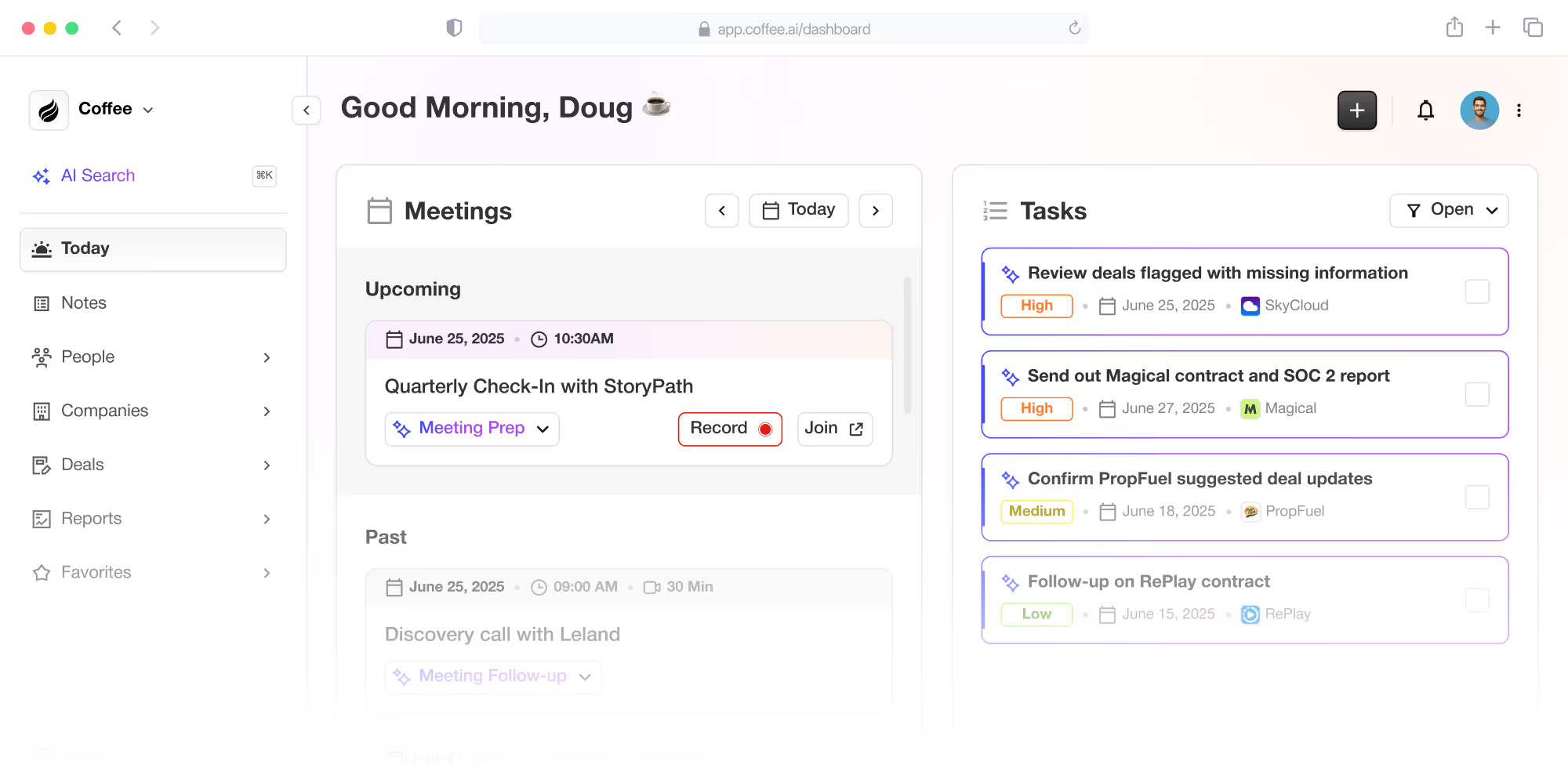
- Meeting Support: Before calls, Coffee delivers briefings with attendee backgrounds and past interaction summaries. Afterward, its AI bot records calls across platforms like Zoom, transcribes them, and drafts follow-up emails.
- Pipeline Tracking: With a built-in data warehouse, Coffee logs historical pipeline changes, letting users compare progress over any period with one click.
- All-in-One Platform: Coffee combines CRM, data enrichment, and call recording into a single system, reducing the need for multiple tools.
Want to see these features in action? Request access to Coffee’s AI CRM now.
How Coffee Improves Sales Operations End-to-End
Coffee doesn’t just automate tasks; it redefines how teams handle customer data and relationships. By addressing common frustrations like fragmented information and administrative overload, it helps turn operations into a competitive edge.
Creating a Single View of Customer Data
Coffee gathers and organizes data from every touchpoint, including emails and meeting notes, to build a complete picture of each relationship. Its data warehouse stores historical records, supporting long-term analysis and better decision-making without any manual updates from reps.
Freeing Reps from Repetitive Work
Through automation, Coffee handles activity logging and meeting summaries, cutting down on time spent on routine tasks. Reps get personalized briefings before interactions and AI-drafted communications after, letting them focus on strategy over paperwork.
Offering Insights for Smarter Decisions
Coffee’s pipeline tools show week-over-week changes, making it easy to spot deals at risk or ready to move forward. It also organizes meeting notes using sales frameworks like BANT or MEDDIC, helping teams stay aligned on qualification and next steps.
Ready to enhance your sales process? Request access to Coffee’s AI CRM and see the difference.
Comparing AI CRM to Traditional Systems: Key Differences
AI-driven CRMs like Coffee approach data and user needs differently from many older platforms. This comparison shows how these differences play out in daily operations.
| Feature | Some Traditional CRMs | Coffee’s AI CRM |
|---|---|---|
| Data Entry | Manual and time-heavy | Automatic via email/calendar sync |
| Data Quality | Often incomplete or scattered | Unified and detailed across sources |
| Meeting Support | Manual preparation and follow-up | AI briefings and automated summaries |
| Pipeline Analysis | Requires manual effort | Instant historical comparisons |
Older systems often struggle with unstructured data or integrating AI features smoothly. Coffee, by contrast, uses a modern architecture to maintain full interaction histories while delivering automation and actionable insights in real time.
Common Questions About AI CRM for Sales Efficiency
How Does Coffee Keep Customer Data Accurate?
Coffee automatically builds and updates records from emails and calendars, capturing every interaction without manual input. This ensures a current and complete view of each relationship, accessible anytime.
Can Coffee Ease the Burden of Manual CRM Tasks?
Yes, Coffee automates logging interactions, preparing for meetings, and drafting follow-ups. Many users save 8 to 12 hours weekly on tasks that once bogged them down in other systems.
How Does Coffee Handle Scattered Data Issues?
Coffee pulls data from all customer touchpoints into one place, organizing it for easy access. This unified history gives reps full context for every engagement without searching across tools.
Does Coffee Work With an Existing CRM Setup?
Yes, Coffee offers a Companion App that integrates with current systems like Salesforce or HubSpot. This lets teams use Coffee’s AI features while keeping their main database intact.
What Sets Coffee’s Pipeline Insights Apart?
Coffee uses a data warehouse to store pipeline snapshots over time. Its comparison tool shows changes instantly, eliminating the need for manual reporting common in older platforms.
Conclusion: Turn Sales Operations Into a Strength With Coffee
Inefficient tools drain time, productivity, and revenue from sales teams. Issues like manual workloads and fragmented data hold back performance in many traditional setups. As part of the shift toward smarter technology, Coffee’s AI-driven CRM automates key tasks, unifies information, and delivers insights that make a difference. Whether used alone or alongside existing systems, it offers a practical way to boost efficiency. Take the next step for your team. Request access to Coffee’s AI CRM today.