Written by: Doug Camplejohn, CEO & Co-Founder, Coffee | Last updated: August 5, 2026
Key Takeaways for Sales Leaders
- Data quality is the hidden variable that determines whether content and coaching tools like Highspot, Seismic, or Mindtickle deliver ROI.
- Highspot, Seismic, and Mindtickle depend on accurate CRM input, while Coffee automates data capture and enrichment to create that foundation.
- Implementation effort is lowest with Coffee, which activates through simple authentication and begins writing enriched records to Salesforce or HubSpot immediately.
- Adoption risk is highest for portal-based tools. Coffee embeds in existing email, calendar, and CRM workflows so reps gain time instead of spending it.
- Fix CRM data quality first with Coffee before layering in content or coaching platforms to maximize enablement ROI.
Comparing Coffee, Highspot, Seismic, and Mindtickle Side by Side
The table below compares four platforms across ten criteria. Highspot, Seismic, and Mindtickle are evaluated as content-and-training tools. Coffee is evaluated as the agentic data-automation layer. These categories are not directly interchangeable, so when a direct comparison is not meaningful, the cell describes the platform’s posture.
| Criterion | Highspot | Seismic | Mindtickle | Coffee |
|---|---|---|---|---|
| Data quality | Depends on CRM input quality | Depends on CRM input quality | Depends on CRM input quality | Automates data capture from email, calendar, and calls, then writes enriched records back to CRM |
| Implementation effort | High, dedicated enablement team recommended | High, enterprise-grade onboarding | Moderate to high, structured onboarding paths required | Low, connects through Google Workspace or Microsoft 365 authentication |
| Workflow fit | Strong for content-heavy sales motions | Strong for enterprise content governance | Strong for structured coaching and certification | Embeds in the rep’s existing email, calendar, and CRM workflow |
| User adoption | Portal-based tools face adoption risk due to required behavior change | Same portal-adoption risk, enterprise teams require change management | Gamified learning improves adoption but still requires rep behavior change | Reps gain time rather than spend it, adoption driven by value delivered automatically |
| Integration requirements | Native Salesforce, Microsoft, Slack connectors | Native Salesforce, Slack, and deep workflow integrations | Salesforce integration embeds content and coaching directly in opportunity records | Companion App for Salesforce and HubSpot, broader integrations currently via Zapier |
| Reporting visibility | Content-to-pipeline attribution and buyer engagement analytics | Granular buyer engagement analytics via Aura AI | Readiness scores, call insights, and methodology adherence dashboards | Pipeline Compare shows week-over-week deal changes automatically, no manual CSV exports |
| Automation depth | AI-guided content recommendations and coaching | LiveDocs automation and Aura Copilot content generation | ElevateOS agentic AI with Deal Guide, AI Tutor, and Buyer Copilot launched April 2026 | Fully autonomous data entry, enrichment, meeting briefings, summaries, and follow-up drafts |
| Content governance | Strict version control and content expiry | Centralized governance with approval workflows | Certification paths and methodology adherence tracking | Not a content management platform, governs CRM data quality instead |
| Scalability | Built for enterprise, best suited to 200+ sellers with dedicated enablement teams | Enterprise-scale, merger with Highspot adds integration timeline risk | Scales with coaching program maturity | Seat-based pricing scales from SMB to mid-market without per-process metering |
| Admin burden | High, content tagging, expiry, and governance require dedicated owners | High, enterprise content operations team typically required | Moderate, AI reduces some coaching administration | Low, the agent handles data entry, enrichment, and logging autonomously |
Setup and Onboarding Timelines
Time-to-value varies significantly across these platforms. Highspot and Seismic require content migration, taxonomy design, and governance configuration before reps see any benefit. Platform migrations for SDR teams can require several weeks from decision to meetings returning to baseline. That timeline assumes strong RevOps management and dedicated migration governance. Mindtickle’s onboarding centers on certification paths and role-play scenarios, which deliver value once content is loaded and managers are trained to use coaching workflows.
Coffee uses authentication-based onboarding. Connecting Google Workspace or Microsoft 365 activates the agent immediately. It scans emails and calendars to auto-create contacts, log activities, and enrich records without manual configuration. For teams already on Salesforce or HubSpot, the Companion App writes enriched data back to the existing system of record from day one.

Data Capture, Maintenance, and AI Accuracy
The average salesperson spends only about one-third of their time actually selling because so many hours are lost to tasks like hunting down information or building slide decks. Manual CRM entry is a primary driver of that lost time and a primary reason enablement platforms underperform.
A 2026 analysis identifies five core components of a modern sales enablement program, and each one depends on accurate CRM data to function:
- Content management
- Training and onboarding
- Coaching and development
- Technology and tools
- Analytics and insights
Poor data quality inevitably leads to poor AI performance in sales enablement, which makes a single source of truth essential for maintaining accurate, up-to-date information across connected systems. Coffee’s agent addresses this at the source. It ingests unstructured data from emails, call transcripts, and calendar events, structures it, and writes it into the CRM automatically. Content recommendations, coaching insights, and analytics in Highspot, Seismic, or Mindtickle then rely on ground-truth data rather than incomplete manual entries.

Eliminate manual data entry with Coffee before it undermines your enablement investment.
Usability for Frontline Teams and Manager Visibility
Adoption is the most important variable in sales enablement software selection because a platform that sellers do not use delivers no value regardless of how sophisticated its AI is. Research shows that 41% of sellers are afraid to change how they do their job, which makes portal-based tools particularly risky. Reps must actively choose to visit a separate interface rather than continue their existing workflow. Highspot and Seismic require reps to visit a separate portal to find content. Mindtickle’s gamified learning improves engagement but still demands behavior change from already stretched reps.
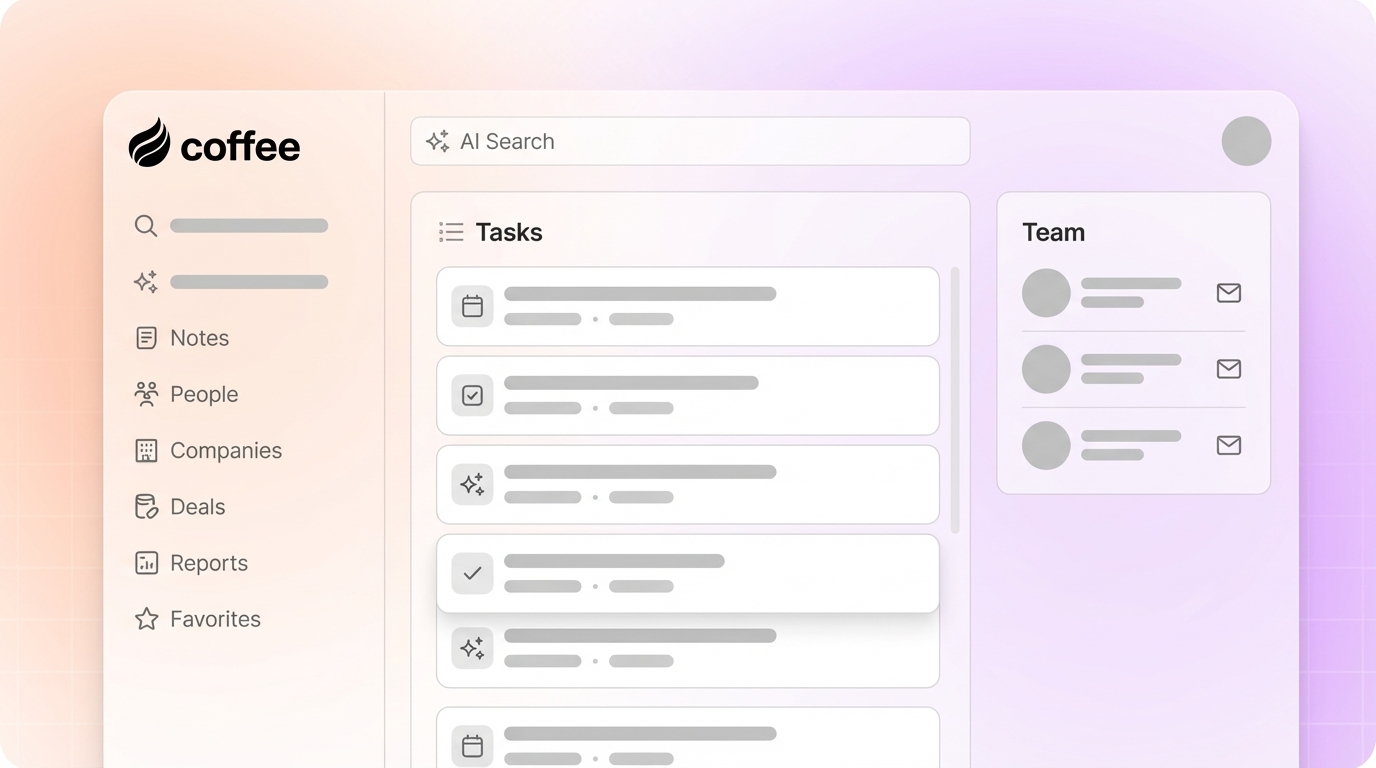
Coffee inverts this dynamic. Reps receive automated meeting briefings, post-call summaries, and drafted follow-up emails without opening a new tool. Managers gain pipeline visibility through the Pipeline Compare feature, which surfaces week-over-week deal changes automatically. The highest-rated sales enablement platforms share three traits: consumer-grade interfaces requiring no more than three clicks to find content, contextual AI that analyzes specific deal data, and seamless bidirectional CRM data sync without manual entry. Coffee satisfies the third trait as the foundational layer that makes the first two possible.

Integration Complexity and Long-Term Flexibility
Native CRM connectors are preferable to simple API access when evaluating sales enablement platform integration depth. Highspot, Seismic, and Mindtickle all offer native Salesforce connectors. Mindtickle’s integration embeds content recommendations, readiness scores, and call insights directly into the Salesforce opportunity record.
Coffee’s Companion App connects to Salesforce and HubSpot through a simple authentication flow and writes enriched contact, company, and activity data back to the CRM continuously. Broader third-party integrations currently run through Zapier, with deeper native connectors on the roadmap. Buyers committed to Salesforce or HubSpot should verify that Coffee’s Companion App covers their required Salesforce objects, including custom fields, required fields, quotas, and forecasting, before deployment.
Buyers evaluating sales enablement software in 2026 must factor merger integration timelines at Seismic and Highspot into their risk assessment, because the announced February 2026 merger means roadmap and support priorities may shift during the transition period.
Scenario-Based Guidance by Company Stage
Early-stage teams (1–50 employees): Teams that have outgrown spreadsheets but find Salesforce too complex should evaluate Coffee’s Standalone CRM. The agent manages the system of record without requiring a dedicated RevOps function. Content and coaching tools are premature at this stage.
Growing sales organizations (50–200 employees): Teams with an established CRM and a growing rep headcount should deploy Coffee as a Companion App first to fix data quality. Once the CRM data is reliable, a coaching tool like Mindtickle can layer on top so call analysis and readiness scores become meaningful.
Teams committed to Salesforce or HubSpot (200–500 employees): These organizations should start with Coffee’s Companion App to automate data entry and enrichment and create a clean data foundation. After that foundation is in place, they can add Mindtickle or Highspot for structured coaching and content governance. Finally, they should define a clear integration plan that connects all three to the Salesforce opportunity record as the system of record.
Operational Ownership and Long-Term Management
Sales enablement platforms require cross-functional ownership. Content governance in Highspot or Seismic demands a dedicated owner who manages tagging, version control, and expiry cycles. Coaching programs in Mindtickle require manager participation to close the loop between call analysis and rep development. Content delivery automation depends on reliable underlying CRM data and governance, including standardized fields like stage, persona, industry, and region to trigger recommended content bundles and next-best actions.
Coffee reduces the administrative burden on RevOps by automating the data entry work that typically falls to reps or admins. The agent’s seat-based pricing model means the cost of automation scales with headcount rather than with usage volume or LLM calls.
Risks and Limitations Across Platforms
No platform eliminates all risk. Highspot and Seismic carry merger integration uncertainty through 2026 and 2027. Mindtickle’s ElevateOS is newly launched, and adoption of agentic features will vary by team maturity. Coffee’s broader third-party integrations rely on Zapier rather than native connectors for tools outside Salesforce and HubSpot, which adds a dependency for teams with complex stacks. Overbuying remains a consistent risk. The most common mistake in sales enablement software selection is starting with a vendor demo rather than a problem definition.
Fix your data quality with Coffee before evaluating content or coaching platforms.
Decision Checklist for Your Enablement Stack
Match your situation to the right starting point using this checklist:
- CRM data is incomplete or stale: Deploy Coffee Companion App before any other enablement tool.
- Reps spend more than two hours per day on manual entry: Use Coffee Companion App or Standalone CRM.
- Content governance and version control are the primary gap: Choose Highspot or Seismic and verify the merger roadmap.
- Structured coaching, certification, and call analysis are the primary gap: Choose Mindtickle.
- Team size under 50, no existing CRM: Start with Coffee Standalone CRM.
- Team size 50–500, committed to Salesforce or HubSpot: Use Coffee Companion App plus one content or coaching platform.
- Team size 200+, dedicated enablement function: Use Highspot or Seismic for content, Mindtickle for coaching, and Coffee for data automation.
- Security requirements: Verify SOC 2 Type II and GDPR compliance across all shortlisted vendors. Coffee is SOC 2 Type II and GDPR compliant.
Frequently Asked Questions
How long does implementation typically take?
Implementation timelines vary by platform type and team size. Content and coaching platforms like Highspot, Seismic, and Mindtickle typically require 8 to 16 weeks from contract to full deployment. That window accounts for content migration, taxonomy configuration, CRM integration setup, and manager training. The timeline extends when dedicated enablement staff are not available to own the rollout. Coffee’s Companion App activates within hours of connecting Google Workspace or Microsoft 365. The agent begins capturing contacts, logging activities, and enriching records immediately, with no content migration or taxonomy design required. For teams adopting Coffee’s Standalone CRM, setup follows the same authentication-based process.
What migration effort is required when switching platforms?
Switching content or coaching platforms requires exporting and re-tagging content libraries, rebuilding governance rules, retraining managers on new coaching workflows, and re-integrating with the CRM. For SDR teams switching outbound platforms, it can take several weeks for sequence enrollment rates and meetings booked per rep to return to pre-switch levels. Coffee’s Companion App does not replace the CRM, so there is no CRM migration. It writes data into the existing Salesforce or HubSpot instance, which means switching to or from Coffee does not require migrating the system of record. The primary migration consideration is ensuring that any Zapier-based integrations are reconfigured if the broader tool stack changes.
How does data quality affect AI features in 2026?
Every AI feature in a sales enablement platform, including content recommendations, deal risk alerts, coaching insights, and forecasting, depends on the quality of the underlying CRM data. If contact records are incomplete, deal stages are updated infrequently, or call transcripts are not logged, the AI has no reliable signal to act on. In 2026, AI-powered predictive analytics in sales enablement platforms can deliver improved accuracy in forecasting deal outcomes when data is clean and complete, often outperforming manual forecasting. Coffee’s agent addresses this at the input layer by automatically capturing and structuring data from emails, calendars, and call transcripts before it enters the CRM. AI features in connected platforms like Mindtickle or Highspot then operate on ground-truth data rather than whatever reps remembered to log.
What security and scalability standards should buyers verify?
All shortlisted platforms should be verified against SOC 2 Type II certification, GDPR compliance, and, for regulated industries, HIPAA or FedRAMP certifications. Buyers in the EU or selling to EU customers should also verify compliance with the EU AI Act (Regulation 2024/1689), under which high-risk obligations apply from 2 August 2026 to AI systems making decisions about individuals, such as employment-related rep performance scoring. Coffee is SOC 2 Type II and GDPR compliant, and customer data is not used to train public models. For scalability, verify that pricing models do not meter on LLM usage or individual process runs, because these costs become unpredictable at scale. Coffee uses seat-based pricing, so the agent’s labor scales with the team without additional per-process charges.
Conclusion: Fix Data First, Then Scale Enablement
Training content integrated with CRM and sales workflows can deliver a significant multiplier for ROI on sales enablement initiatives. That multiplier assumes the CRM data is accurate. When it is not, content recommendations surface irrelevant assets, coaching insights are built on incomplete call logs, and forecasting reflects what reps entered rather than what actually happened in the deal.
The sequence matters. Fix the data layer first, then layer in content and coaching tools. Coffee’s agent automates the data-in process so that every downstream enablement investment, whether Highspot, Seismic, Mindtickle, or another platform, operates on a foundation that reflects reality. Enablement ROI begins with clean CRM data, and clean CRM data begins with an agent that handles the work humans consistently skip.
Build your data foundation with Coffee, the layer your sales enablement stack depends on.