Written by: Doug Camplejohn, CEO & Co-Founder, Coffee | Last updated: July 27, 2026
Key Takeaways
- Sales engagement platforms automate multichannel outreach but still rely on reps to log unstructured data manually, which creates ongoing data-quality issues.
- Legacy SEPs sync activity to CRMs on a schedule, which introduces latency, duplicates, and gaps that hurt forecasting accuracy.
- Agent-led platforms like Coffee capture emails, calls, and calendar events automatically, so manual data entry disappears and CRM records stay accurate in real time.
- By turning unstructured data into structured records without rep input, agent-led systems improve pipeline visibility, forecast reliability, and revenue orchestration.
- Teams ready to replace manual processes with automated data capture can get started with Coffee today.
Comparing Legacy SEPs and Agent-Led Platforms
The table below compares core capabilities across legacy sales engagement platforms and agent-led platforms. Every data point is drawn from published research.
| Capability | Legacy SEP (e.g., Salesloft, Outreach) | Agent-Led Platform (e.g., Coffee) |
|---|---|---|
| Multichannel Automation | Predefined sequences across email, phone, LinkedIn, SMS fired on a schedule or by prospect behavior | Agent monitors signals, adapts sequences in real time, and triggers plays without rep intervention |
| CRM Sync | Bidirectional API sync on a schedule, which introduces latency, duplicate records, and data gaps in Salesforce reports | Agent writes structured records directly to Salesforce or HubSpot in real time and can also operate as a standalone system of record |
| Analytics | Outreach execution metrics such as open rates, reply rates, and sequence step performance | Pipeline intelligence derived from agent-captured data, including week-over-week deal changes, stall detection, and forecast accuracy |
| AI Orchestration | AI-assisted email drafts and task prioritization, while reps still advance prospects manually through steps | Agentic AI executes actions, booking meetings, enriching contacts, triggering next steps, and preparing call briefs automatically |
The gap in the CRM Sync row is where most teams lose. When activity is created in a separate engagement system and transferred to the CRM on a schedule, that architecture introduces latency, duplicate records, and data gaps that affect forecasting and pipeline inspection. An agent-led platform eliminates the transfer step entirely and keeps the system of record current.
See how Coffee eliminates sync latency and data gaps
How CRMs and Sales Engagement Platforms Differ
A CRM functions as a system of record, while a sales engagement platform functions as a system of action. A CRM focuses on record keeping, storing customer data, tracking deal stages, and reporting on pipeline, while a sales engagement platform focuses on execution automation, running the outreach activities that create and advance deals.
| Dimension | CRM (Passive Database) | Sales Engagement Platform (Legacy) | Agent-Led Platform (Coffee) |
|---|---|---|---|
| Primary Function | Store accounts, contacts, opportunities, and history | Automate outreach sequences and push activity to CRM | Capture all data automatically and orchestrate outreach and pipeline in one agent |
| Data Entry Model | Manual, with 32% of salespeople spending an hour or more per day on manual data entry | Partially automated, while unstructured data such as call notes and email text still requires human logging | Fully automated, as the agent ingests emails, calendars, and transcripts to populate structured records |
| Pipeline Visibility | 68% of sales leaders report that their sales forecasts are inaccurate or unreliable, a problem attributed to limited pipeline visibility | Sequence-level metrics, while pipeline data still depends on CRM accuracy | Week-over-week pipeline compare derived from agent-captured ground-truth data |
| Deployment | Standalone system of record | Sits on top of CRM and requires integration maintenance | Standalone CRM or companion layer on Salesforce or HubSpot |
Why Data Quality Breaks in Traditional Stacks
The functional difference between systems becomes a data-quality problem at scale. CRM databases degrade every year, and manual entry accelerates this decay through skipped fields, inconsistent abbreviations, and duplicate records. A legacy sales engagement platform adds a sequencing layer but does not fix the underlying data capture problem. It still depends on the CRM being accurate, and the CRM is only as accurate as the humans feeding it.
| Metric | CRM Alone | CRM + Legacy SEP | CRM + Agent-Led Platform |
|---|---|---|---|
| Data Capture Method | Manual field entry by rep | Automated sequence activity, while unstructured data remains manual | Agent captures emails, calls, and calendar events automatically |
| CRM Data Accuracy | 76% of organizations report less than half of their CRM data is accurate and complete | Marginally improved for logged sequence steps, with gaps that remain for calls and meetings | Agent-maintained records, where one deployment raised CRM completion from 15% to 90% |
CRM databases degrade at a notable rate per year, and manual entry drives much of that decay. Skipped fields, inconsistent abbreviations, and duplicate records compound over time. A legacy sales engagement platform adds a sequencing layer but does not change the decay source, because it still relies on humans to capture unstructured data. Agent-led platforms counteract decay through continuous enrichment and automated activity logging, which keeps records current without extra work from reps.
Forecast accuracy follows the same pattern. Traditional forecasting is inaccurate for 68% of companies, largely because the underlying CRM data is incomplete or stale. A legacy SEP cannot fix that foundation. An agent-led platform improves forecast reliability by feeding the system of record with complete, real-time activity data.
AI Sales Engagement Automation That Removes Manual Data Entry
Sales reps spend an average of 5.5 hours per week on manual data entry into CRM systems. That time cost compounds into lower close rates when CRM data stays dirty, while teams with clean, automatically maintained databases close more deals.
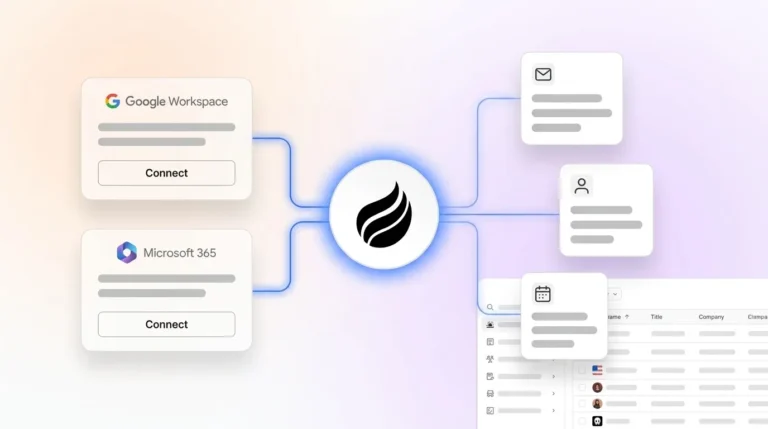
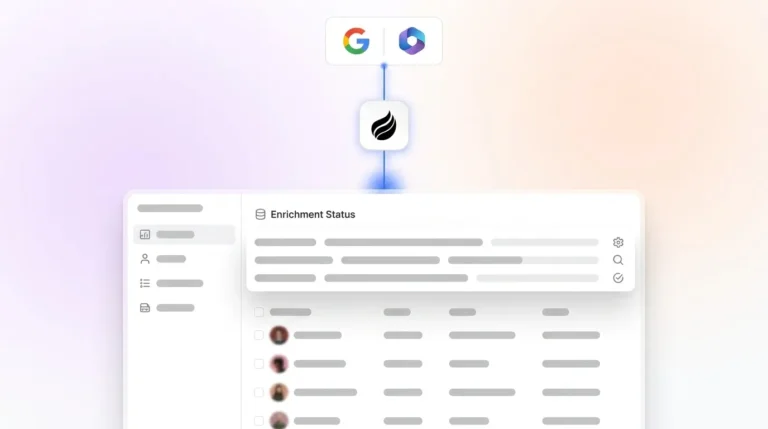
The agent-led approach changes this workflow completely. When Coffee connects to Google Workspace or Microsoft 365, the agent scans emails and calendars to auto-create contacts and companies and logs last and next activity autonomously. The agent joins calls via Zoom, Teams, or Meet to record and transcribe conversations. After each call, the agent generates summaries, identifies next steps, and drafts follow-up emails without rep input. Unstructured data such as email text, call transcripts, and meeting notes becomes structured CRM records in real time.

A Gartner survey of 1,026 B2B sellers found that sellers who partner with AI are 3.7 times more likely to meet quota. When the agent handles data capture, reps spend their time selling instead of typing, which directly supports that outcome.
Revenue Orchestration Capabilities Across the Sales Cycle
In December 2025, Gartner published its first Magic Quadrant for Revenue Action Orchestration, a category that merges revenue intelligence, sales engagement, and sales force automation into a single AI-driven discipline. Leading teams already see that point solutions which require manual stitching create fragmented data and unreliable forecasts.
Coffee’s agent delivers revenue orchestration capabilities across the entire sales cycle. Before each call, the agent prepares a “Today” page that surfaces attendee roles, past interaction context, and deal status, which replaces the 30 to 45 minutes a rep would otherwise spend on manual research. After the call, the agent generates structured summaries aligned to BANT, MEDDIC, or SPICED and drafts follow-up emails for one-click review and send.

Between calls, the agent maintains pipeline visibility by visualizing week-over-week changes, including progressed deals, stalled opportunities, and new additions, which replaces manual CSV exports and turns pipeline reviews into strategic discussions. The same agent identifies new prospects by turning anonymous website traffic into named, enriched prospects with LinkedIn profiles, pages visited, and time on site, surfaced through real-time Slack notifications.

Companies that integrated AI-powered revenue orchestration reported 1.7x revenue growth and 1.6x EBIT margins compared to competitors, while only 5% of companies have reached this level of integration. Data quality, not technology, blocks most teams. An agent that captures clean data from day one removes that barrier.
Explore Coffee’s revenue orchestration capabilities
Choosing the Right Coffee Deployment for Your Stack
Coffee operates in two main models, and the right choice depends on where your team is today.
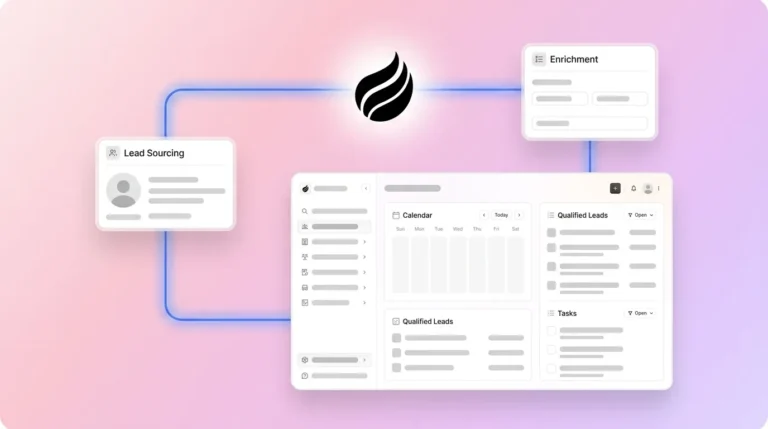
Scenario 1: You have outgrown spreadsheets. Your team is 1 to 20 people, you track deals in Notion or a spreadsheet, and you know manual entry will not scale. A traditional CRM like HubSpot or Pipedrive would require the same manual maintenance you want to avoid. Coffee’s Standalone CRM deploys the agent as the system of record from day one, with contacts auto-created from Google Workspace, activity logged without human input, and pipeline visible without a CSV export.
Scenario 2: You are committed to Salesforce or HubSpot and need an agent layer. Your team has invested in a CRM, but adoption is low, data quality is poor, and reps still act as data-entry clerks. Coffee’s Companion App authenticates to your existing instance and deploys the agent to handle data capture, enrichment, and logging. The agent writes clean, structured records back to Salesforce or HubSpot without a rip-and-replace project.
Scenario 3: You are already using Salesloft or Gong and want to consolidate. The average B2B GTM team runs 8 to 15 tools, often creating fragmented stacks with tool overlap where signals get lost. Coffee performs the jobs of multiple point solutions, including CRM, enrichment, call recording, pipeline intelligence, and visitor identification, in a single agent. This consolidation reduces cost and eliminates the toggle tax of switching between tools.
Quick Checklist: Match Your Stack to a Coffee Model
- Tracking deals in spreadsheets or Notion? Choose Coffee Standalone CRM.
- Running Salesforce or HubSpot with low adoption or poor data quality? Choose Coffee Companion App.
- Paying for separate tools for enrichment, recording, and sequencing? Consolidate into Coffee.
- Running pipeline reviews from manual CSV exports or rep-reported updates? Use Coffee Pipeline Compare.
- Seeing anonymous website traffic with no visibility into who is visiting? Turn it into leads with Coffee Visitor Identification and Suggested Leads.
Frequently Asked Questions
How long does it take to implement Coffee?
For the Standalone CRM, setup begins immediately after connecting Google Workspace or Microsoft 365. The agent starts scanning emails and calendars to auto-create contacts and companies from the first session. For the Companion App on Salesforce or HubSpot, a simple authentication flow connects Coffee to the existing instance. There is no lengthy data migration, no custom object mapping required to get started, and no IT project. Most teams are operational within a single working session.
Is Coffee SOC 2 and GDPR compliant?
Yes. Coffee is SOC 2 Type 2 and GDPR compliant. Customer data is not used to train public AI models. For teams in regulated-adjacent industries or those with procurement security reviews, Coffee’s compliance posture covers the standard requirements for a B2B SaaS tool that handles sales and communication data.
Does Coffee integrate with tools outside Salesforce and HubSpot?
Coffee currently supports integrations with other tools via Zapier, which covers a broad range of GTM and productivity applications. Deeper native integrations are on the product roadmap. The core agent functionality operates natively without requiring Zapier for teams on Google Workspace or Microsoft 365.
How is Coffee priced?
Coffee uses seat-based pricing. You pay for the human seats on your team, and the agent’s labor for data capture, enrichment, meeting management, pipeline intelligence, and visitor identification is included without additional metering on AI usage or workflow steps. There are no separate charges for LLM calls or process executions. This model keeps the cost predictable and directly tied to headcount rather than usage volume.
Can Coffee replace a dedicated sales engagement platform like Salesloft or Outreach?
For teams at the 10 to 50 person scale, Coffee consolidates the core functions of a sales engagement platform, including multichannel outreach, sequence management, call recording, and CRM sync, along with the data capture and pipeline intelligence capabilities that legacy SEPs depend on a separate CRM to provide. Coffee’s agent handles the data-in problem that causes both CRMs and legacy SEPs to underperform. Teams already using Salesloft or Outreach can deploy Coffee as a Companion App to fix the data quality layer without replacing their existing sequencing workflow immediately.
Conclusion: Turning Passive Systems into an Agent-Led Revenue Engine
Legacy CRMs and traditional sales engagement platforms share a core limitation, because both rely on humans to supply accurate data. Poor data quality causes organizations to lose revenue and miss sales deals. Adding a sequencing layer on top of a passive database does not fix the root cause. It simply adds another tool that depends on the same flawed input.
Coffee’s agent-led approach addresses the problem at the source. By capturing unstructured data from emails, calendars, and call transcripts automatically, the agent keeps the system of record accurate without forcing reps to act as data-entry clerks. The result is pipeline intelligence that leaders can trust, forecasts that reflect reality, and a sales team that spends its time selling.
Coffee works as a standalone CRM for teams that have outgrown spreadsheets and as a companion layer for teams committed to Salesforce or HubSpot. This flexibility creates a path to clean data and reliable pipeline visibility regardless of where your stack starts today.