
Last updated: February 1, 2026
Key Takeaways
- The sales intelligence market reaches $5.37B in 2026, yet reps still waste about 70% of their time on admin instead of selling.
- Legacy CRMs fail because they rely on manual data entry, while AI agents like Coffee capture data automatically from emails, calls, and meetings.
- Top tools include ZoomInfo for enterprise data (4.5/5), Apollo for all-in-one prospecting (4.4/5), and Coffee as the #1 agent automation platform.
- Coffee saves 8-12 hours per week for each rep through automatic CRM enrichment, pipeline tracking, and fully automated workflows.
- Teams using AI agents see 56% higher quota attainment; get started with Coffee to automate your sales stack today.
Sales Intelligence in 2026 and Why Legacy CRMs Fall Behind
Sales intelligence tools are B2B platforms that deliver data enrichment, buyer intent signals, technographics, and contact information beyond what traditional CRMs provide. These platforms help sales teams identify prospects, personalize outreach, and track buying signals across their target market.
Traditional CRMs act as passive databases that demand constant human maintenance. Sales representatives spend 27.3% of their time on data entry and administrative work, and Gartner reports that 50% of rep time goes to admin tasks alone. Legacy systems like Salesforce carry decades of architectural baggage and struggle with unstructured data from emails, calls, and meetings.
The 2026 shift centers on AI agents that capture, unify, and analyze sales data automatically. Instead of dumping information into spreadsheets, intelligent agents like Coffee manage the full workflow from data ingestion to clear insights. Sales teams move away from data entry and focus on strategic selling.

Top Sales Intelligence Tools for 2026
1. ZoomInfo: Enterprise-Grade B2B Data
ZoomInfo dominates enterprise sales intelligence with 500 million contacts and 100 million company profiles. The platform delivers broad B2B data coverage, buyer intent signals, and technographic insights for large prospecting teams.
Pros: Extensive database accuracy, advanced filtering, strong CRM integrations
Cons: High cost, manual data entry still required, complex setup for new teams
Pricing: Custom enterprise pricing
G2 Rating: 4.5/5 based on 8,800+ reviews
2. Apollo.io: All-in-One Prospecting and Outreach
Apollo combines prospecting, engagement, and analytics in one platform. The tool offers contact discovery, email sequences, and basic CRM features for mid-market teams that want a single system.
Pros: Integrated workflows, competitive pricing, user-friendly interface
Cons: Limited advanced analytics, manual list building for many use cases
Pricing: Starting at $49/month
G2 Rating: 4.4/5
3. LinkedIn Sales Navigator: Network-Driven Selling
Sales Navigator uses LinkedIn’s professional network to support relationship-based selling. The platform helps with social selling, warm introductions, and account mapping inside existing connections.
Pros: Network-based prospecting, InMail messaging, relationship insights
Cons: Limited to the LinkedIn ecosystem, manual outreach required for every sequence
Pricing: $99.99/month
G2 Rating: 4.3/5
Coffee for Salesforce and HubSpot: AI Agent for Existing CRMs
Coffee works as an AI agent that manages data entry, enrichment, and pipeline updates for Salesforce or HubSpot. The agent captures unstructured data from emails, calls, and meetings, then writes clean insights back to your CRM without human effort.
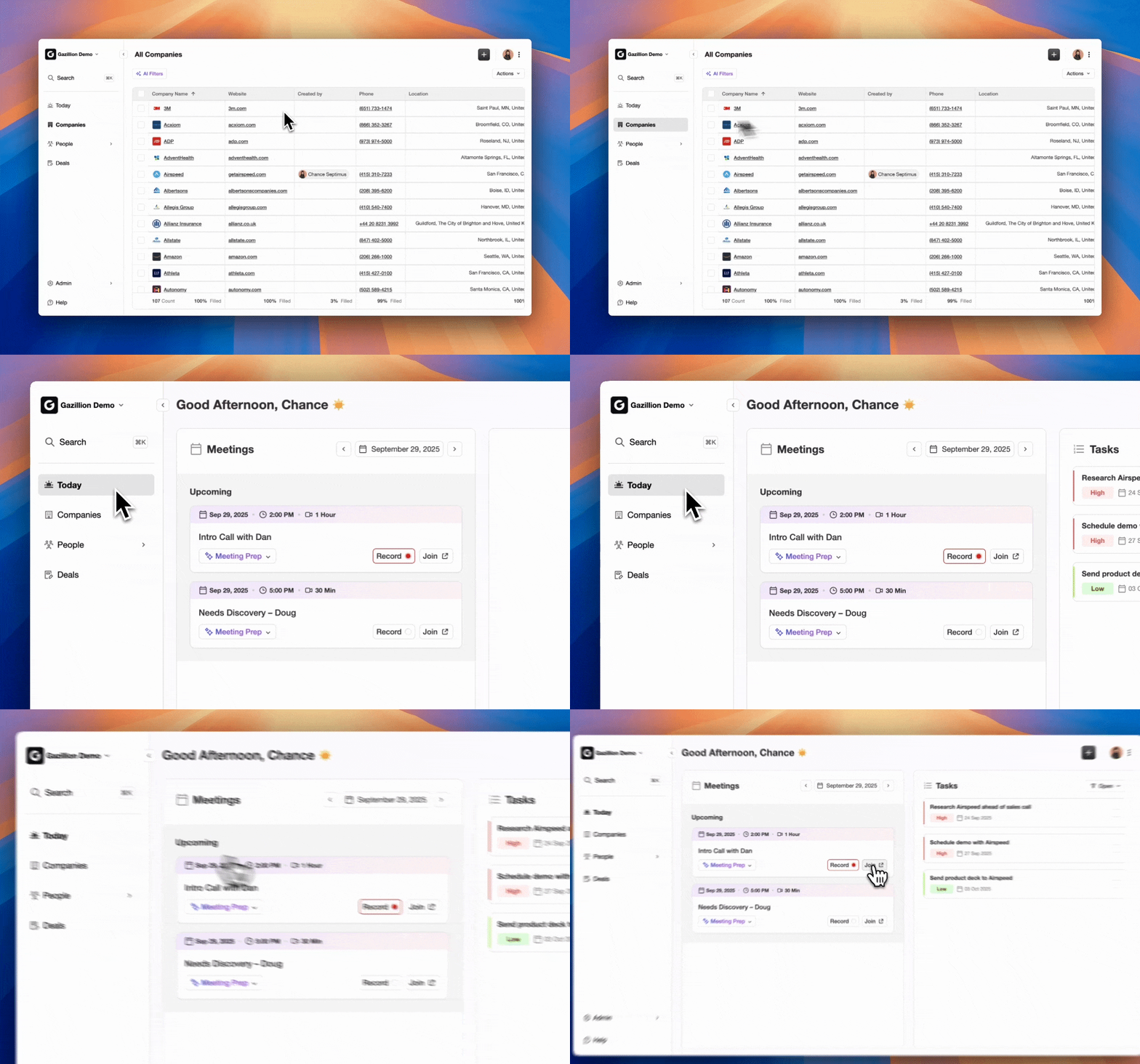
Pros: Saves 8-12 hours per rep each week, automatic data unification, strong pipeline intelligence
Cons: Newer platform, limited legacy integrations outside the core stack, Zapier available for flexibility
Pricing: Seat-based pricing
G2 Rating: Emerging leader

4. 6sense: Predictive Account and Intent Intelligence
6sense delivers predictive sales intelligence using AI-powered intent data and account scoring. The platform highlights in-market accounts and reveals buyer journey insights for enterprise ABM programs.
Pros: Predictive analytics, accurate intent data, CRM integration for large teams
Cons: Complex implementation, higher cost, benefits increase with data science support
Pricing: Custom enterprise pricing
G2 Rating: 4.6/5
5. Gong: Conversation and Deal Intelligence
Gong analyzes sales conversations to surface coaching insights and deal risk. The platform records calls and meetings, then uses AI to highlight winning patterns and warning signs across the sales cycle.
Pros: Conversation analytics, coaching recommendations, deal forecasting
Cons: No prospecting tools, limited features for top-of-funnel work
Pricing: Custom pricing
G2 Rating: 4.8/5
Coffee Standalone CRM: AI-First CRM for SMBs
Coffee’s standalone CRM serves small businesses that have outgrown spreadsheets but find traditional CRMs heavy and confusing. The AI agent manages all data automatically so founders and early sales hires can focus on conversations and revenue.

Pros: Zero manual data entry, fast setup, automation powered by an AI agent
Cons: Newer platform, fewer enterprise-grade features
Pricing: Seat-based pricing
G2 Rating: Emerging leader
7. Lusha: Fast Contact Enrichment
Lusha delivers contact enrichment through browser extensions and API connections. The tool focuses on finding email addresses and phone numbers for prospects discovered on LinkedIn and company sites.
Pros: Handy browser extension, real-time enrichment, affordable plans
Cons: Limited company-level data, basic analytics
Pricing: Starting at $29/month
G2 Rating: 4.2/5
Coffee Pipeline Compare: Automated Pipeline Intelligence
Coffee’s Pipeline Compare feature tracks week-over-week changes in deal movement, stalled opportunities, and new pipeline. Because the AI agent keeps CRM data clean, pipeline reviews shift from data validation to strategic decision-making.
Pros: Automated pipeline tracking, historical analysis, and no manual reporting work
Cons: Requires Coffee agent implementation
Pricing: Included in seat-based pricing
G2 Rating: Emerging leader
The Agent Revolution: How Coffee Replaces Passive Tools
Traditional sales intelligence tools behave like passive databases that push information into spreadsheets and static reports. Reps then move that data into CRMs by hand, which keeps the core problem alive. Poor data quality costs businesses up to $32,000 per sales representative every year through lost selling time.
Coffee’s AI agent shifts teams from passive data to active intelligence. The agent captures data from Google Workspace, deploys meeting bots for call transcription, builds targeted prospect lists through natural language prompts, and surfaces pipeline intelligence without human effort. One growing AI company replaced a spreadsheet-based sales process with Coffee and removed manual data entry while keeping the flexibility to script custom briefings through API access.

This agent revolution turns sales teams into strategic sellers instead of data entry operators. Get started with Coffee to experience autonomous sales intelligence in your own workflow.
Coffee vs. Top Competitors: Side-by-Side Comparison
|
Feature |
Coffee |
ZoomInfo |
Apollo |
Gong |
|
Time Saved |
8-12 hours/week |
Manual entry required |
Automated workflows available |
Analysis only |
|
Data Accuracy |
Agent-verified |
High volume |
Standard |
Conversation-focused |
|
CRM Integration |
Native SF/HubSpot |
API-based |
Basic sync |
Bi-directional sync |
|
Pricing Model |
Seat-based |
Custom enterprise |
Per-user tiers |
Custom enterprise |
How to Pick a Sales Intelligence Tool in 2026
Agent automation should rank above raw data volume when you evaluate sales intelligence platforms. Organizations using intelligence-driven AI sales tools see 56% higher quota attainment, and they reach that level when the technology runs workflows instead of adding manual tasks.
Check CRM compatibility, SOC 2 security, and unstructured data handling. The strongest platforms connect smoothly with Salesforce or HubSpot and still offer standalone options for growing teams. Favor tools that simplify your tech stack and reduce context switching instead of adding more disconnected systems.
Get started with Coffee to test agent-powered sales intelligence with your team.
Frequently Asked Questions
What is a sales intelligence tool?
A sales intelligence tool is a B2B platform that provides contact data, company information, buyer intent signals, and market insights. These tools help sales teams find prospects, personalize outreach, and track buying behavior. They extend basic CRM capabilities with enriched data, technographics, and predictive analytics that improve prospecting and deal conversion.
Which sales intelligence tool is top-rated?
ZoomInfo leads traditional sales intelligence with a 4.5/5 G2 rating based on broad data coverage and enterprise features. Coffee stands out as an emerging leader for agent-powered automation, helping teams remove manual data entry and repetitive workflow management.
What is the difference between CRM and sales intelligence?
CRMs store and manage customer relationship data. Sales intelligence tools enrich that data with external insights, buyer intent signals, and market intelligence. Traditional CRMs rely on manual data entry and operate as passive databases. Modern sales intelligence platforms like Coffee act as active agents that capture, unify, and analyze sales information across many touchpoints.
What are the best sales intelligence tools for startups?
Coffee’s standalone CRM fits startups that have outgrown spreadsheets but see traditional CRMs as too complex and expensive. The AI agent manages all data behind the scenes so founders and early sales hires can spend time selling instead of running systems. Transparent seat-based pricing scales with team growth.
Are there free sales intelligence tools?
Apollo provides a limited free tier with basic contact discovery and email features. Advanced prospecting often requires paid Sales Navigator or similar tools. Comprehensive sales intelligence usually needs paid platforms, and Coffee delivers strong value through agent automation that removes the hidden costs of manual data entry and workflow management.
Conclusion: Move to Agent-Powered Sales Intelligence
The 2026 sales intelligence market splits between passive data providers that keep manual workflows in place and active AI agents that automate the sales process. Traditional tools like ZoomInfo excel at data volume, yet they do not solve the core issue that reps spend most of their time on administrative work instead of selling.
Coffee’s AI agent points to the future of sales intelligence by turning teams into strategic sellers. Organizations reach 56% higher quota attainment when they adopt intelligence-driven AI tools that run workflows instead of adding manual steps.
Get started with Coffee today and experience the agent revolution in sales intelligence.