
Key takeaways
- Legacy sales pipeline CRMs create heavy manual data entry, fragmented information, and unreliable forecasts that limit growth.
- Agent-led CRMs automate data capture across email, calendar, and calls, improving data quality and reducing administrative work for sales teams.
- Coffee uses an active AI agent to maintain your system of record, support meeting preparation and follow-up, and deliver clear pipeline intelligence.
- Leaders can evaluate build versus buy options, change management needs, and ROI metrics to adopt an agent-led CRM with lower risk.
- Teams that implement Coffee’s agent-led CRM in 2026 can streamline their pipeline, improve visibility, and focus more time on selling; see Coffee pricing and plans to get started.
The Challenges of Legacy Sales Pipeline CRMs
Legacy CRM systems often fail to deliver strategic value and demand constant manual maintenance. These platforms create barriers to effective pipeline management and slow down modern sales organizations.
Manual data entry and fragmented information
Legacy CRMs demand extensive manual data entry, which leads to wasted time and inconsistent data across tools. Internal Coffee benchmarks indicate that sales representatives spend most of their week on administrative tasks and less than half on direct selling. Fragmentation forces teams to move between multiple tools, such as HubSpot for records and ZoomInfo for enrichment, which creates a complex and expensive workflow.
Outdated architecture and poor user adoption
Many traditional CRMs sit on architectures with decades of legacy code and rigid data models. These systems struggle with unstructured data, such as email text or call transcripts. Basic relational databases often lose historical context when fields are updated, which makes it harder to understand deal histories.
Sales reps frequently see these systems as a chore instead of a productivity tool. Low adoption drives the use of “shadow CRMs” such as spreadsheets and Notion, which weakens data quality and visibility.
Inaccurate forecasting and pipeline bottlenecks
Poor data quality and inconsistent updates within legacy systems lead to unreliable sales forecasts. Bad input results in weak output and makes pipeline insights less useful for planning and coaching.
Organizations that want to move beyond legacy CRM limitations can get started with Coffee’s agent-led solution and shift routine work to an AI agent.
How Agent-Led CRMs Change Sales Pipeline Management
Coffee functions as an active CRM agent in a market of passive databases. The platform improves sales pipeline management through intelligent automation and clear, timely insights.
Automating data management with the Coffee Agent
The Coffee Agent handles data entry automatically. The agent creates and enriches contacts, companies, and activities, and typically saves representatives 8–12 hours per week. It unifies structured and unstructured data from emails, calendars, and transcripts into a single, coherent view of each account and opportunity.
The agent also supports meetings as a pre and post-meeting assistant. It prepares briefings, drafts summaries, identifies action items, and writes follow-up emails, so reps can focus on the conversation.

Delivering actionable pipeline intelligence
Coffee improves pipeline analysis by tracking all changes automatically without extra data entry from reps. The agent consolidates CRM, enrichment, recording, and forecasting capabilities into one platform. This reduces the need for manual CSV exports and additional point solutions.
Pipeline Compare provides real-time views of week-over-week changes. Teams can see which deals progressed, stalled, or appeared in the pipeline and can hold more focused pipeline and forecast reviews.
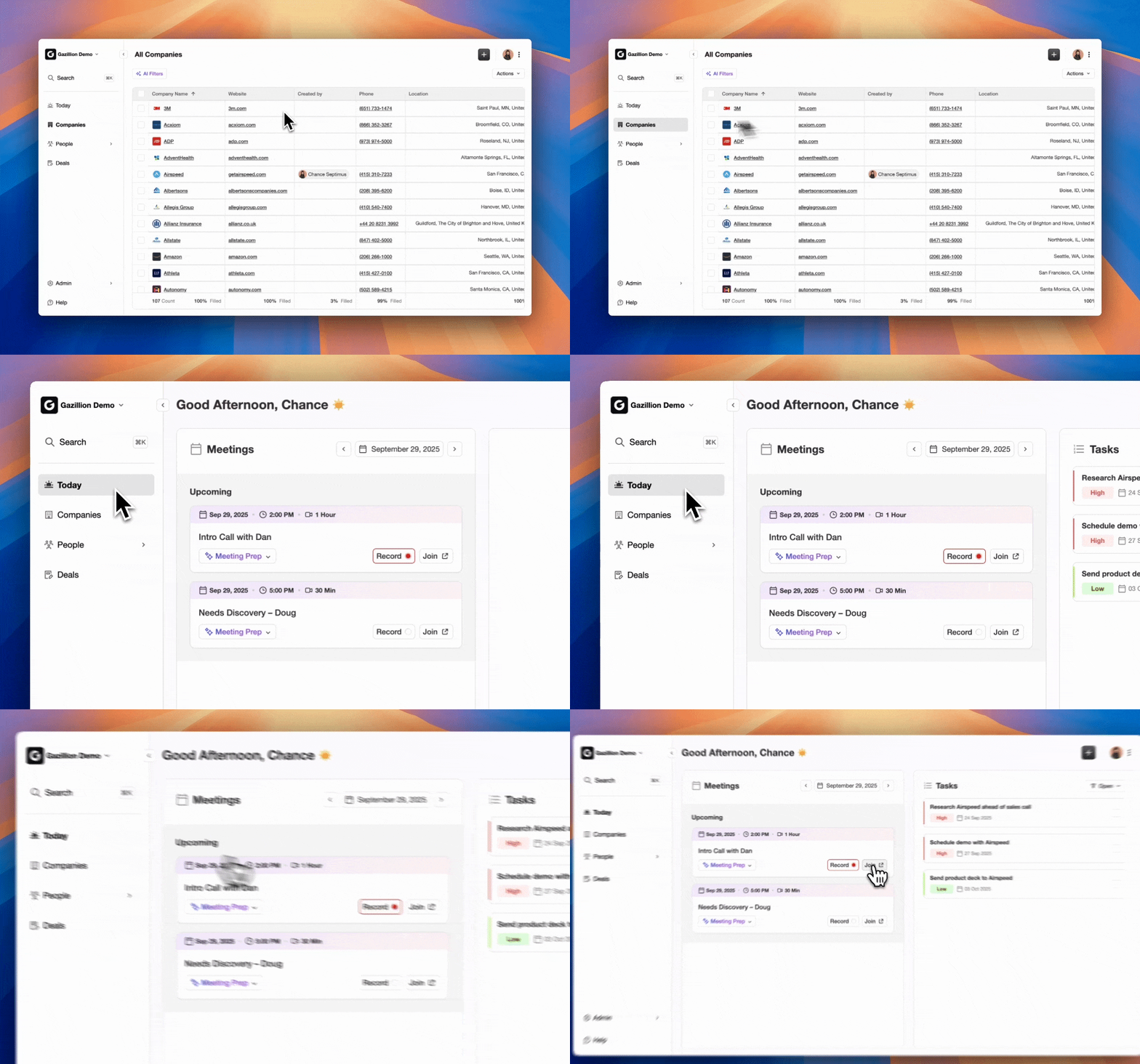
A CRM experience reps actually use
Coffee delegates administrative chores to the agent so sales professionals can focus on selling and relationship building. The system becomes a co-pilot that quietly keeps records complete and current in the background. Higher adoption leads to better data quality and more reliable reporting.
Strategic Considerations for Adopting an Agent-Led CRM
Successful implementation of agent-led CRM technology benefits from a clear strategy, realistic timelines, and alignment across leadership, sales, and operations.
Build vs. buy: evaluating your CRM strategy
Leaders need to weigh the benefits of developing in-house AI capabilities against integrating a specialized agent-led solution such as Coffee. Key factors include:
- Upfront development and infrastructure costs
- Ongoing maintenance, security, and model updates
- Time-to-market and impact on current initiatives
- Internal AI and data engineering expertise
Building internal capabilities can work for large organizations with deep resources. For many teams, a focused solution like Coffee offers a faster and lower-risk path.
Organizational readiness and change management
Effective adoption starts with assessing readiness, identifying sponsors, and defining how roles and processes will change. Agent-led systems such as Coffee reduce friction because the agent removes manual tasks instead of adding new ones.
Clear communication that the agent acts as a co-pilot, not a replacement, helps address concerns and encourages adoption across sales, RevOps, and leadership.
Measuring ROI and success metrics
Teams can measure the impact of an agent-led CRM using concrete metrics, such as:
- Improved pipeline visibility and forecast accuracy
- Hours saved per rep from automated data entry and enrichment
- Increased number of customer meetings and opportunities created
- Higher CRM adoption and data completeness rates
These indicators help show the value of Coffee and support ongoing investment decisions.
Overcoming Obstacles: Avoiding Common Strategic Pitfalls
Even experienced teams can encounter challenges when shifting to agent-led CRM. Addressing common pitfalls early keeps the rollout on track.
The “garbage in, garbage out” trap
Poor data quality undermines insights and coaching. Coffee’s agent-led approach reduces this risk by automating data capture and enrichment from verified sources. The agent continuously updates information, which helps maintain accuracy over time without relying on sporadic manual cleanup projects.
Disconnected tools and inconsistent methodologies
Fragmented tools and inconsistent sales methodologies weaken pipeline health. An agent-led system, such as Coffee, unifies these elements and keeps data flowing across sales activities.
The Coffee Agent can structure its insights according to methodologies such as BANT, MEDDIC, or SPICED. Teams gain consistent notes, fields, and next steps without asking every rep to remember each framework detail during calls.
Teams that want to align tools, methodology, and execution can get started with Coffee and centralize their pipeline operations.
Coffee’s Agent: A Practical Advantage in Modern Sales Pipeline Management
Coffee’s agent-led model offers flexible deployment options that fit different business sizes and existing technology stacks.
The standalone AI-first CRM
This option works well for small to mid-sized businesses that have outgrown spreadsheets or simple tools and want automation without complex setup. The Coffee Agent powers the entire platform, maintains the system of record, and supports daily sales workflows.

The Companion App for Salesforce and HubSpot
For companies already invested in Salesforce or HubSpot, Coffee acts as an intelligent layer that addresses low adoption, poor data quality, and missing data. Simple authentication lets the Coffee Agent sync data, enrich records, and write insights back to the primary CRM without changing existing workflows.
Advanced pipeline intelligence with the Pipeline Compare feature
Coffee’s agent supports better pipeline discussions with features such as Pipeline Compare. The feature visualizes changes across time, highlights progressed deals, stalled opportunities, and new additions, and helps leaders run focused forecast and pipeline reviews.
|
Feature |
Traditional CRM |
Coffee agent-led CRM |
|
Data entry |
Manual, time-consuming |
Automated by an agent |
|
Pipeline intelligence |
Requires manual analysis |
AI-assisted insights |
|
Rep productivity |
Limited time for selling |
More time for selling |
|
Data quality |
Inconsistent, often outdated |
Continuously enriched |
Improve your Sales Pipeline with Coffee in 2026
Traditional CRMs struggle to keep pace with modern sales motions. Coffee’s agent-led approach offers a focused way to manage the sales pipeline, improve data quality, and reduce administrative work for reps.
Whether your team needs a standalone AI-first CRM or a companion to Salesforce or HubSpot, Coffee’s agent can begin improving sales pipeline performance with minimal disruption.
Teams that want clearer pipeline visibility and more selling time can get started with Coffee’s agent-led CRM and put an AI agent to work across their revenue operations.
Frequently Asked Questions about Agent-Led Sales Pipeline CRMs
How does an agent-led CRM handle data security and privacy?
Coffee maintains security with SOC 2 Type 2 and GDPR compliance to support secure data handling. The platform does not use customer data to train public models and follows strict data privacy and access controls.
Can an agent-led CRM integrate with my existing tech stack and tools?
Coffee offers integration capabilities, including a Companion App for Salesforce and HubSpot, plus connections via Zapier for broader compatibility. The roadmap includes deeper native integrations to further consolidate tech stacks and reduce complexity.
How does an agent-led CRM improve forecasting accuracy and pipeline visibility?
Automated data capture and enrichment give Coffee’s agent higher-quality input data for pipeline analysis. Features such as Pipeline Compare track changes automatically and provide real-time visibility into deal progression and pipeline health without manual updates or spreadsheet exports.
Is an agent-led CRM truly “loved by reps,” given past CRM frustrations?
Coffee addresses common pain points by acting as a co-pilot that automates administrative tasks and reduces clicks. The agent removes the manual data entry burden, which helps turn the CRM into a practical productivity tool for reps.
What makes Coffee’s approach different from traditional CRM automation?
Traditional CRMs often expect humans to serve the software. Coffee reverses this model by using an agent that manages data quality, orchestrates workflows, and provides timely insights. The result is a CRM that stays up to date and supports day-to-day selling instead of acting only as a static database.