Written by: Doug Camplejohn, CEO & Co-Founder, Coffee | Last updated: June 19, 2026
Key Takeaways for More Reliable Forecasts
- Automated data entry by an AI agent removes the bad-data problem that causes forecast misses and lifts accuracy above 80%.
- Manual CRM data entry keeps most organizations below 50% data accuracy, while agent-managed pipelines reach 92–95% forecast accuracy by capturing real-time activity.
- AI agents reclaim 8–12 hours per week for reps by handling emails, calls, meetings, and structured qualification data automatically.
- Week-over-week pipeline tracking and structured qualification notes from call transcripts remove stale close dates and human bias from forecasts.
- Teams ready to replace spreadsheets and fragmented tools with a single agent can get started with Coffee today.
How to Improve Sales Pipeline Forecasting Accuracy
Seventy-nine percent of sales organizations miss their forecast by more than 10% in 2026, which stalls hiring plans and disrupts cash flow. The root cause is not a broken formula. The root cause is broken data. Traditional methods that rely on gut feel and static CRM data reach only 70–79% accuracy. AI-driven sales-forecast models that analyze real-time signals reach measured accuracy of up to 92–95% in top cases, even though some vendors claim 97%. Data quality explains almost the entire gap between those results.
Seventy-six percent of organizations report that less than half of their CRM data is accurate (Validity, 2025). Coffee’s AI Agent addresses this at the source by automatically logging every email, call, and meeting. It saves reps an average of 2 hours and 15 minutes daily, or 8–12 hours per week, and redirects that time to selling. The table below compares five key performance dimensions between manual and agent-managed pipelines so you can see how automation closes the data-quality gap that causes forecast misses.
| Dimension | Manual Pipeline Management | Agent-Managed Pipeline (Coffee) | Source |
|---|---|---|---|
| Forecast accuracy range | 70–79% | up to 92–95% | |
| Rep time on data entry | 71% of reps say too much time spent on entry | Reclaimed via the 8–12 hrs/week savings noted above | Coffee market data |
| Rep time actually selling | Only 35% of time on selling | Reps shift more time to selling activities | Coffee market data |
| CRM data accuracy | Less than 50% accurate at 76% of orgs | Ground-truth capture from emails, calendars, transcripts | Validity, 2025 |
| Forecasting error reduction | Baseline | Error reduced through automated workflows |
Sales Forecast Accuracy Formula and Why Data Quality Rules It
The standard sales forecast accuracy formula is: Forecast Accuracy % = 100 − |((Actual Revenue − Forecasted Revenue) / Actual Revenue) × 100|. This is the inverse of Mean Absolute Percentage Error, or MAPE. High-performing sales organizations often achieve 90–95% forecast accuracy. A strong rate is 90% or higher, which means actual revenue lands within 10% of the forecast.
The formula is only as reliable as the pipeline data feeding it. Stale close dates, inflated deal values, and outdated opportunities distort projections and damage forecast accuracy. An AI agent that owns data entry removes those variables before they corrupt the calculation. Companies improve forecast accuracy when they combine automated CRM data-quality workflows with regular pipeline cleaning.
Pipeline Management vs. Forecasting: Why the Difference Matters
Pipeline management is the operational discipline of moving deals through defined stages, such as lead generation, qualification, proposal, negotiation, and close, while capturing activity data at each step. Clearly defined pipeline stages form the building blocks that let sales teams predict revenue with reasonable accuracy by showing deal locations, stalled opportunities, and high-impact activities.
Sales forecasting is the analytical output that comes from that pipeline data. It is a projection of revenue over a defined period. The two concepts are not interchangeable. Pipeline management is the data-input process. Forecasting is the data-output process. Disconnected tools and manual data entry create blind spots that make accurate forecasting impossible, while automated capture of seller activity into the CRM keeps the “good data in, good data out” loop intact.
This dependency means no forecasting tool, regardless of sophistication, can compensate for a broken pipeline management process. Teams must fix the input layer first.
Salesforce Forecasting Best Practices for 2026
Despite the heavy investment in CRM and forecasting tools described earlier, the sub-75% accuracy rate persists because Salesforce functions as a passive database. It stores what humans enter, and humans enter data inconsistently.
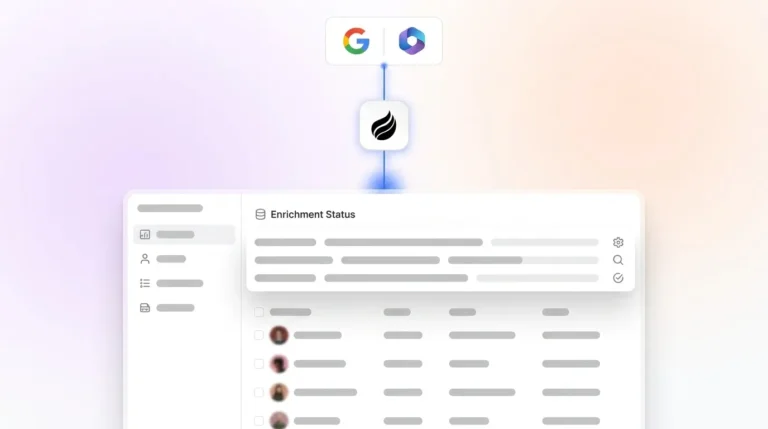
The 2026 best practice is to deploy an agent as the data-entry layer on top of Salesforce. Coffee’s Companion App authenticates with an existing Salesforce instance and immediately begins to work.
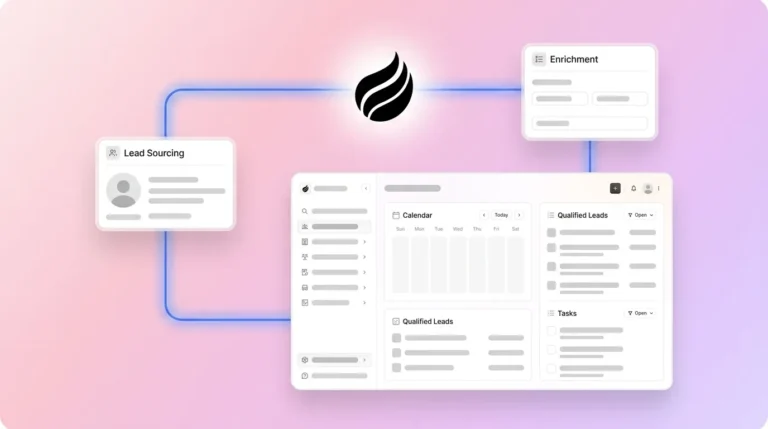
- Auto-creating and enriching contacts and companies from emails and calendar events
- Logging last activity and next activity autonomously so deal state stays current
- Structuring qualification notes in BANT, MEDDIC, or SPICED format directly into Salesforce fields
- Flagging required fields that are missing before they corrupt the forecast
Those Salesforce best practices depend on one upstream capability: capturing qualification data from sales calls without asking reps to type notes. Coffee’s meeting management agent delivers that capability by turning every call into structured CRM data automatically.

Agent-Driven Meeting Management and Structured Qualification Data
Every sales call becomes a data-capture opportunity when an agent handles the details that humans skip. Coffee’s AI Agent operates as an active participant in the sales cycle.

- Pre-meeting briefings: The agent surfaces attendee roles, past interactions, and open action items on a “Today” page before each call.
- Live transcription: The agent joins Zoom, Teams, or Google Meet calls to record and transcribe in real time.
- Structured post-call notes: The agent generates summaries mapped to BANT, MEDDIC, or SPICED fields and writes them back to the CRM record automatically.
- Follow-up drafts: The agent drafts follow-up emails in Gmail for rep review, which keeps next steps logged before the rep moves to the next call.
Emerging agentic AI capabilities now support autonomous deal execution by updating CRM fields, scheduling follow-ups, and flagging risks without human intervention. Coffee delivers this capability today and feeds cleaner data into every forecast.

Pipeline Compare for Week-over-Week Change Tracking
Coffee’s agent captures all pipeline activity into a built-in data warehouse, which preserves historical context that legacy CRMs lose when fields are overwritten. The Pipeline Compare feature then visualizes exactly what changed between any two pipeline snapshots.
- Deals that progressed, stalled, or were added since the last review
- Close dates that slipped and the number of days they moved
- Deal values that changed without a logged reason
- Opportunities with no next activity logged
This shift turns the weekly pipeline review from a manual interrogation, where managers export CSVs and cross-reference spreadsheets, into a strategic discussion grounded in objective data. Teams that track pipeline velocity weekly tend to achieve higher forecast accuracy than teams that review the pipeline only occasionally.
Salesforce and HubSpot Integration Without Extra Tools
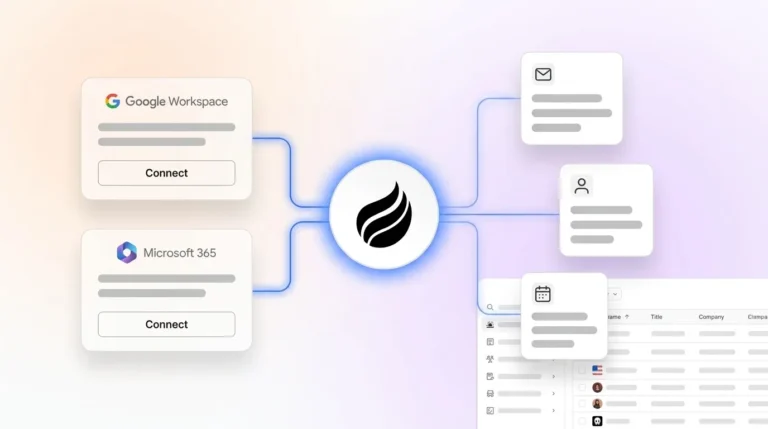
Coffee operates as a Companion App through a simple authentication flow. Once connected, the agent syncs data bidirectionally, enriches records with job titles, funding data, and LinkedIn profiles via licensed data partners, and writes structured insights back to Salesforce or HubSpot. This happens without middleware, without Zapier chains for core functionality, and without extra point solutions.

This approach consolidates the fragmented stack that most RevOps teams maintain, which often includes a separate enrichment tool such as ZoomInfo or Apollo, a separate conversation intelligence tool such as Gong or Fathom, and a separate forecasting overlay. Coffee performs all three jobs as a single agent layer, which reduces cost and removes the data synchronization gaps between tools that corrupt pipeline records.
Measuring Forecast Accuracy After Automation
After teams deploy an agent-managed pipeline, the most useful metrics shift from lagging indicators, such as missed quota, to leading indicators, such as data completeness and pipeline velocity. Track these five metrics weekly in sequence. Start with data completeness, then assess deal health, confirm coverage, measure forecast error, and finally check whether deals move fast enough to close on time. Each metric builds on the previous one.
- Field completion rate: This measures whether you have the data needed to forecast accurately. Track the percentage of open opportunities with all required qualification fields populated.
- Activity recency: This identifies stalled deals that will likely miss their close dates. Deals stalled beyond 28 days show 67% lower conversion rates, 14.3% versus 43.2%.
- Pipeline coverage ratio: This confirms that you have enough volume to absorb normal attrition. A healthy range is 3x–5x quota.
- Forecast MAPE: This quantifies your prediction error. Target below 15% MAPE, or above 85% accuracy, within 30 days of addressing data quality issues.
- Pipeline velocity: This predicts whether deals will close on schedule. Calculate it from deal count multiplied by average deal size and win rate, then divided by sales cycle length. This metric serves as an early leading indicator of whether the pipeline will deliver committed revenue on time.
Common Forecasting Pitfalls That Agents Prevent
Three recurring data problems account for most forecast misses in manual pipelines. An agent addresses each one directly.
- Stale close dates: Reps often push close dates forward without logging a reason. The agent flags every close-date change and requires a logged activity to justify it, which keeps the forecast honest.
- Missing qualification fields: As noted in the earlier data-quality comparison, missing fields corrupt forecasts. The agent prevents this by populating BANT, MEDDIC, or SPICED fields from call transcripts automatically.
- “Happy ears” bias: AI removes the human bias and “happy ears” that plague traditional forecasting by analyzing objective data signals instead of relying on a rep’s optimism. Coffee’s agent operationalizes this principle by surfacing deal health scores derived from actual engagement signals such as email reply rates, meeting attendance, and stakeholder involvement rather than rep sentiment.
Frequently Asked Questions
Does Coffee integrate with Salesforce and HubSpot?
Yes. Coffee operates as a Companion App that connects to existing Salesforce or HubSpot instances through a simple authentication flow. Once connected, the Coffee Agent syncs data bidirectionally, enriches records, logs activities, and writes structured qualification notes back to the primary CRM without manual field updates from reps. Coffee understands Salesforce and HubSpot configurations including quotas, forecasting hierarchies, and required fields, which distinguishes it from newer CRM alternatives that lack this integration depth.
Is Coffee SOC 2 and GDPR compliant?
Yes. Coffee is SOC 2 Type 2 certified and GDPR compliant. Customer data is not used to train public AI models. For teams in regulated industries or organizations with strict data governance requirements, Coffee’s compliance posture allows deployment without a multi-year security review, although Coffee is best suited for small-to-mid-market companies rather than large enterprises with highly customized compliance workflows.
How does Coffee’s data quality compare with ZoomInfo?
Coffee’s enrichment data, which covers job titles, company funding, and LinkedIn profiles via licensed data partners, is roughly on par with ZoomInfo for most small-to-mid-market use cases. The key difference is that Coffee delivers enrichment as a built-in capability of the agent rather than as a separate subscription. This removes the integration overhead of maintaining a ZoomInfo connector alongside a CRM, a conversation intelligence tool, and a forecasting overlay. Teams that require highly specialized data coverage for enterprise accounts may still evaluate ZoomInfo independently, but most Coffee customers find the built-in enrichment sufficient and prefer the consolidated stack.
What is Coffee’s pricing model?
Coffee uses straightforward seat-based pricing. Organizations pay for human seats, and the agent’s labor, including data entry, enrichment, meeting management, pipeline intelligence, and Pipeline Compare, is included without extra metering on AI usage or automated processes. There are no per-process fees or LLM consumption charges. Coffee is available both as a Standalone CRM for companies with 1–20 employees and as a Companion App for small-to-mid-market teams already committed to Salesforce or HubSpot. Full pricing details are available at coffee.ai/pricing.
Conclusion: How Agent-Managed Pipelines Lift Forecast Accuracy
Sales pipeline management best practices for accurate forecasting in 2026 converge on a single operational decision. Teams must stop relying on humans as data entry clerks and deploy an agent to own that work. Manual pipelines create stale records, missing qualification fields, and happy-ears bias that no forecasting formula can correct. The principle of “good data in, good data out” explains how organizations move from sub-75% forecast accuracy to above 80%.
Coffee’s AI Agent captures activities automatically, structures BANT, MEDDIC, or SPICED data from call transcripts, and tracks week-over-week pipeline changes through Pipeline Compare. It also integrates directly with Salesforce and HubSpot, which removes spreadsheets, extra headcount, and a fragmented tool stack from the forecasting process. Together, these capabilities create a single, accurate view of the pipeline that supports reliable revenue predictions.
Make forecast accuracy above 80% your baseline and get started with Coffee now.