Written by: Doug Camplejohn, CEO & Co-Founder, Coffee | Last updated: July 13, 2026
Key Takeaways for Cleaner Pipelines and Tighter Forecasts
- Poor CRM data hygiene, including stale deals, missing close dates, and inconsistent stage definitions, drives most forecast misses above 10%.
- Advancing pipeline stages on rep activity instead of verifiable buyer commitment inflates win probabilities and turns forecasts into guesswork.
- Dead or inactive deals left in the pipeline distort coverage ratios; deals stalled beyond 28 days show 67% lower conversion rates and must be removed automatically.
- Generic stage probabilities ignore historical conversion data; back-testing close rates by deal size, source, and product line produces more reliable forecasts.
- Coffee’s autonomous CRM Agent enforces clean data entry and buyer-commitment rules without adding manual work for reps—see Coffee’s pricing and start your free trial to eliminate pipeline hygiene errors before they destroy your next forecast.
The Problem: How Dirty Pipeline Data Breaks Your Forecast
79% of sales organizations miss their forecast by more than 10%, with poor data hygiene identified as the primary cause. Research shows that companies improving CRM data hygiene can increase forecast accuracy, yet 76% of organizations say less than half of their CRM data is accurate and complete, with missing close dates, stale values, and inactive deals left open. Every weighted pipeline number then rests on fiction instead of reality.
A healthy B2B sales team achieves a forecast variance of plus or minus 5 percent on committed deals. Anything beyond ±10% counts as a significant miss, yet fewer than 25% of sales organizations achieve accuracy within 10% of actual results. The root cause rarely sits in the forecasting model. It almost always sits in the pipeline data feeding that model.
Automated agent intervention provides the only scalable fix. Manual audits degrade under quota pressure, rep incentives favor optimism, and legacy CRMs lack a mechanism to enforce buyer-commitment evidence at each stage. The eight mistakes below show exactly where the data breaks down and how Coffee’s Agent corrects each failure point. Before diving into those specific breakdowns, you can explore Coffee’s automated pipeline hygiene solution or keep reading to see which pipeline errors are destroying your forecast accuracy and how automated intervention solves them.
Mistake 1: Advancing Deals on Seller Activity Instead of Buyer Commitment
Symptom: Stages advance when a rep sends a proposal or completes a demo, not when the buyer takes a verifiable action. When stages advance on seller motion alone without matching buyer commitment, the pipeline position is a guess and the forecast is only a sum of guesses. This pattern inflates win probability across the pipeline.
Fix: Define every stage by a verifiable buyer commitment, such as “economic buyer confirmed terms are worth evaluating,” and require documented evidence before any stage advance. Organizations with structured pipeline management where each stage represents a clear shift in buyer commitment can improve forecast accuracy.
Coffee Agent automation: The Coffee Agent structures call notes using MEDDIC, BANT, or SPICED and writes buyer-commitment evidence directly back to the CRM record. This approach makes stage advancement criteria enforceable without extra rep data entry.
Mistake 2: Leaving Dead Deals in the Active Pipeline
Symptom: Opportunities with no logged activity remain in active pipeline, which inflates coverage ratios and distorts probability weights. As noted earlier, stalled deals show dramatically lower conversion rates, yet many sales teams continue to include these phantom opportunities in their active forecasts. In practice, roughly 30–50% of pipeline at quarter-end is functionally dead or stale.
Fix: Implement automated removal rules that flag any opportunity with no logged activity for 14 or more days and escalate it for disqualification review. Run weekly pipeline cleaning so these dead deals do not linger and distort coverage.
Coffee Agent automation: Coffee’s Pipeline Compare feature automatically surfaces stalled and inactive deals week over week. Managers can then act on dead deals before they corrupt the quarter-end forecast, without exporting CSVs.
Mistake 3: Relying on Generic Stage Probabilities
Symptom: Most teams assign generic benchmarks such as 20% at discovery, 50% at proposal, and 80% at negotiation that bear no relationship to actual historical conversion rates. Deals closing within 45 days carry a 68% win rate, but the rate drops to 23% for deals that remain open beyond 90 days. Generic probabilities ignore this time-based decay entirely.
Fix: Back-test stage probabilities quarterly by calculating the actual close rate of all deals that entered each stage over the prior 12 months. Apply those rates separately by deal-size band, source, and product line so the forecast reflects real behavior.
Coffee Agent automation: Coffee captures all pipeline changes in a built-in data warehouse. It maintains the historical conversion data required to produce back-tested, deal-specific probabilities automatically.
Mistake 4: Allowing Reps to Define Stages Differently
Symptom: One rep marks “proposal sent” after emailing a pricing PDF, while another requires a formal SOW presented to the economic buyer. Misalignment between sales and marketing on lead definitions often appears as well. When stage definitions vary by rep, the manager’s roll-up becomes unreliable before any forecast math begins.
Fix: Establish company-wide exit criteria for every stage based on observable buyer actions. Enforce these criteria through manager calibration and automated field validation so no one can skip steps.
Coffee Agent automation: The Coffee Agent applies consistent qualification frameworks such as MEDDIC, BANT, and SPICED across every call. It writes structured outputs to the same CRM fields, which removes rep-by-rep interpretation of what a stage means.
Mistake 5: Ignoring Buying Committees and Multi-Threading
Symptom: Single-champion deals receive high-probability treatment because the champion stays engaged, while the economic buyer, legal, and IT stakeholders remain undocumented. Research behind The Jolt Effect (Dixon and McKenna, 2022; 2.5 million recorded conversations) found that 40–60% of qualified, interested buyers end in no decision, often because seller optimism about one contact masked committee-level inertia.
Fix: Require documented economic-buyer engagement as a stage exit criterion. Flag any late-stage deal where only one contact appears in the record so managers can intervene.
Coffee Agent automation: Coffee automatically creates and enriches contact records from emails and calendar data. It surfaces multi-threading gaps directly in the pipeline view without asking reps to log every stakeholder interaction manually.
Mistake 6: Treating Pipeline Size as the Only Health Signal
Symptom: A 4x coverage ratio looks healthy until it becomes clear that 40% of the pipeline is stale, single-threaded, or built on seller-activity stages. Poor pipeline hygiene signals critical data quality problems that cannot support accurate forecasting. Bloated coverage ratios then mask quality issues and create false confidence heading into the quarter.
Fix: Coverage ratio alone cannot distinguish healthy pipeline from bloated pipeline. To get a true quality signal, supplement it with pipeline velocity, time-in-stage distribution, and a composite hygiene score that weights activity recency, contact completeness, and buyer-commitment evidence. Together, these metrics expose the quality issues that raw coverage numbers hide.
Coffee Agent automation: Coffee’s Pipeline Compare feature tracks week-over-week changes across all health dimensions, not just total value. RevOps leaders gain a real-time quality signal instead of a lagging size metric.
Mistake 7: Skipping Forecast Retrospectives Entirely
Symptom: Forecast accuracy measurement fails without a locked snapshot of the forecast at period start. Without a lockdown snapshot, reps retroactively update CRM records to match final results, turning measurement into record-keeping rather than predictive evaluation. When no retrospective occurs, optimism bias compounds quarter over quarter with no correction mechanism.
Fix: Lock the forecast at the start of each period, track commit-to-close conversion rates after the quarter ends, and run a structured bias-detection review. Identify reps with persistent happy-ears or sandbagging patterns and coach them using that data.
Coffee Agent automation: Coffee’s data warehouse preserves historical pipeline state automatically. It provides the lockdown snapshots and variance data required for a meaningful retrospective without manual exports.
Forecast Retrospective: Running a Post-Quarter Review That Actually Improves Accuracy
Now that the risks of skipping retrospectives are clear, this process shows how to run one correctly. A structured retrospective converts forecast misses from frustrating surprises into correctable process failures. The process requires four steps that work together as a closed feedback loop: you lock the baseline, measure what actually happened against that baseline, identify which reps show systematic bias, and then use those findings to recalibrate your model for the next period.
- Lock the snapshot. At the start of the quarter, record every opportunity’s stage, amount, close date, and forecast category. This snapshot becomes the baseline for measuring actual results.
- Calculate commit-to-close conversion. Divide closed-won revenue from last quarter’s Commit deals by total Commit value at lockdown. A rate below 80% signals problems with category discipline.
- Run bias detection by rep. Persistent negative forecast bias indicates happy ears where reps promote deals to advanced stages too early, while persistent positive bias indicates sandbagging. Focus on structural patterns rather than one-off misses.
- Update stage probabilities. Apply the actual close rates observed this quarter to recalibrate stage probabilities for the next period, segmented by deal size and source.
Coffee’s Agent automates steps one and four by maintaining a continuous data warehouse of pipeline state and surfacing variance reports without manual data pulls.
See how Coffee automates retrospectives and close the accuracy gap permanently.
Manual vs. Agent-Automated Pipeline Hygiene in Practice
The table below shows how agent automation turns each critical hygiene task from a manual burden into an automated quality control system, and how that shift improves forecast accuracy.
| Hygiene Task | Manual Process Impact | Agent-Automated Outcome | Forecast Accuracy Effect |
|---|---|---|---|
| Stage advancement validation | Rep subjectivity undermines forecast accuracy, and stages advance on optimism rather than evidence | Coffee Agent enforces buyer-commitment exit criteria by writing structured qualification data (MEDDIC/BANT/SPICED) from every call directly to the CRM record | Structured stage management can improve forecast accuracy |
| Stale deal removal | Stalled deals remain in active forecasts without manual review, despite their 67% lower conversion rates | Coffee’s Pipeline Compare surfaces inactive deals week over week automatically, enabling immediate disqualification action | Weekly pipeline cleaning can improve forecast accuracy |
| CRM data completeness | With most CRM data incomplete or inaccurate, missing fields and stale values compound into unreliable forecasts | Coffee Agent auto-creates contacts, logs activities, and enriches records from emails and calendar data without rep input | Improving CRM data hygiene can increase forecast accuracy |
| Forecast retrospective data capture | Without a lockdown snapshot, reps retroactively update records to match results, which makes accuracy measurement impossible | Coffee’s built-in data warehouse preserves historical pipeline state continuously, providing lockdown snapshots and variance reports on demand | Weekly pipeline velocity tracking can improve forecast accuracy |
Frequently Asked Questions
What counts as buyer-commitment evidence at each pipeline stage?
Buyer-commitment evidence is any verifiable action taken by the buyer, not the seller, that confirms genuine progress toward a purchase decision. Examples include a confirmed meeting with the economic buyer, a written response agreeing that terms are worth evaluating, receipt of technical requirements from the buyer’s IT team, legal initiating contract review, or a signed mutual action plan with a committed close date. Seller actions such as sending a proposal, completing a demo, or leaving a voicemail do not qualify as buyer commitment. The practical test asks whether a third party reviewing the CRM record could independently confirm the buyer took the action without relying on the rep’s interpretation.
How does Coffee integrate with existing Salesforce or HubSpot instances?
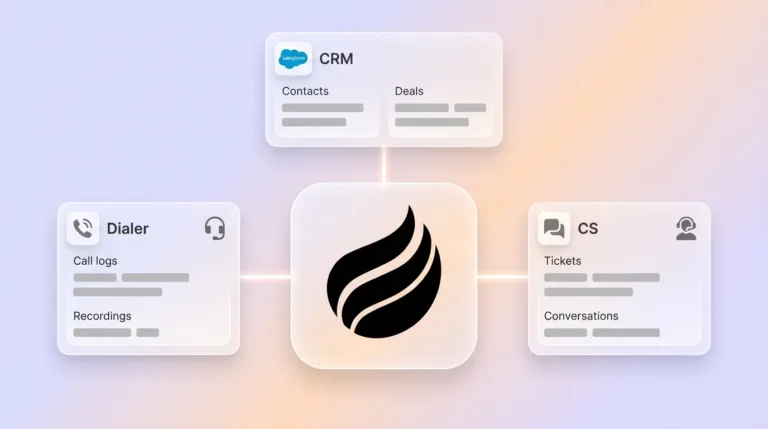
Coffee operates as a Companion App that sits on top of existing Salesforce or HubSpot installations. A simple authentication connects the Coffee Agent to the existing system of record. From that point, the Agent handles the data-in process, capturing activities from emails and calendars, enriching contact and company records, logging call summaries and next steps, and writing structured qualification data back to the CRM fields already in use. No migration is required. The existing Salesforce or HubSpot instance remains the system of record, and Coffee keeps the data inside it accurate and complete without adding manual work for reps.
Is Coffee secure enough for sales data?
Coffee is SOC 2 Type 2 and GDPR compliant. Customer data is not used to train public AI models. For SMB and mid-market sales teams operating on Salesforce or HubSpot, this means the pipeline data, call transcripts, and contact records processed by the Coffee Agent meet the same security standards required by most enterprise procurement reviews. Teams in heavily regulated industries such as healthcare or finance with multi-year security review requirements fall outside Coffee’s current ideal customer profile.
How much forecast accuracy improvement can a team realistically expect?
The improvement depends on the current state of pipeline hygiene. Teams starting from a baseline where the majority of CRM records are incomplete, stage definitions are unenforced, and no retrospective process exists can expect the largest gains. Research shows that improving CRM data hygiene alone can increase forecast accuracy. Best-in-class organizations using structured forecasting processes and technology achieve higher forecast accuracy than their peers. Coffee’s Agent is designed to deliver the clean, consistent data required to reach the ±5% benchmark that defines best-in-class forecast accuracy.
What is the rule for handling close-date slippage?
If a buyer pushes a deal to the next quarter, the close date must be updated that same day. Close-date slippage above 30%, measured as the number of opportunities with a pushed close date divided by total opportunities in the forecast, indicates a systemic problem with deal qualification, buyer engagement, or sales process adherence. Deals that repeatedly slip close dates without corresponding updates to stage, amount, or forecast category should be removed from near-term coverage calculations entirely. The Coffee Agent tracks all pipeline changes automatically and surfaces close-date slippage patterns in the Pipeline Compare view so managers can intervene before a single slipped deal cascades through the quarterly forecast.
Conclusion: Fixing Pipeline Mistakes with Automated Data Quality
Each of the eight mistakes above degrades forecast accuracy independently. Together, they compound into a system where the vast majority of organizations miss their number by double digits, where the majority of CRM data is incomplete or inaccurate, and where fewer than 25% of sales teams achieve accuracy within 10% of actual results. The revenue leakage does not stem from a forecasting model problem. It stems from a data quality problem that begins when a rep advances a deal without buyer evidence, leaves a dead opportunity open, or assigns a probability based on a generic benchmark instead of historical conversion data.
Coffee’s autonomous CRM Agent addresses every one of these failure points. It enforces buyer-commitment evidence through structured qualification frameworks, removes dead deals through automated activity monitoring, maintains historical conversion data in a built-in data warehouse, and writes clean, consistent data back to Salesforce or HubSpot without requiring reps to act as data entry clerks. The result is a pipeline that reflects operating reality rather than optimism and a forecast that leadership can defend.
Start your Coffee trial today and build the only sustainable path to excellent forecast accuracy.