
In the fast-paced world of sales, every moment matters when it comes to meeting targets and closing deals. Yet, sales professionals often spend less than 30% of their time actually selling, with the bulk of their day consumed by repetitive administrative tasks and inefficient systems. Sales teams using automation for routine tasks can save an average of 5 hours per week. Let’s explore the broader market landscape and dive into seven AI CRM features that can help save time, streamline workflows, and get you back to what you do best: selling.
Understanding the Sales Technology Landscape
The sales technology market has evolved significantly over the past two decades. Initially, CRM systems like Salesforce emerged as powerful tools to organize customer data, providing a centralized database that replaced disparate spreadsheets and rolodexes. These traditional platforms focused on structure and reporting, often prioritizing managerial oversight over the day-to-day needs of sales reps. As a result, many reps found themselves bogged down by manual data entry and rigid workflows that felt more like a burden than a benefit.
Today, the market is shifting toward AI-driven solutions that prioritize efficiency and user experience. With the rise of cloud computing, integrations, and machine learning, modern CRMs are no longer just repositories of information; they’re becoming intelligent assistants that anticipate needs and automate grunt work. However, adoption varies widely. Some companies stick to legacy systems due to entrenched processes or high switching costs, while others seek newer tools to address specific pain points like data fragmentation or time management. About 71% of sales reps report spending too much time on data entry, highlighting a persistent gap that newer technologies aim to fill.
This landscape reveals a key tension: balancing robust functionality with ease of use. On one hand, traditional CRMs offer deep customization and scalability, ideal for large enterprises with complex needs. On the other, they can be clunky and time-intensive without significant customization or additional tools. AI-first platforms, as part of a broader trend toward automation, focus on reducing friction through smart features, though they may not yet match the full depth of legacy systems for very specialized use cases. For sales teams, the choice often comes down to whether time savings and user adoption outweigh the familiarity of established tools.
Why Manual Tasks Drain Your Sales Day
The Burden of Data Entry
Data entry eats up valuable time for sales reps. Imagine finishing a promising call with a prospect, only to spend the next 10 minutes logging notes, updating records, and ensuring every detail is in the system. Multiply that by dozens of daily interactions, and it’s easy to see why less than 30% of a rep’s time goes to actual selling. This repetitive work not only wastes hours but also breaks focus, pulling reps away from building relationships and closing deals.
Disjointed Tools and Workflows
Sales teams often rely on a patchwork of tools, from CRM platforms like HubSpot to outreach systems like SalesLoft and data providers like ZoomInfo. Switching between these tools creates mental fatigue and wastes time. Each transition means reorienting yourself, and important details can slip through the cracks when data doesn’t sync across systems. This fragmented setup turns technology into a hurdle rather than a helper.
Challenges with Traditional CRMs
Older CRM systems, such as Salesforce, were designed decades ago for a different era of data management. While they handle complex datasets well, some users find integrating modern data types or automating workflows challenging without add-ons or custom setups. If not tailored to a team’s specific needs, these systems can lead to incomplete records and lower efficiency, especially when manual input is required for routine updates.
How Coffee Fits Into the AI CRM Trend
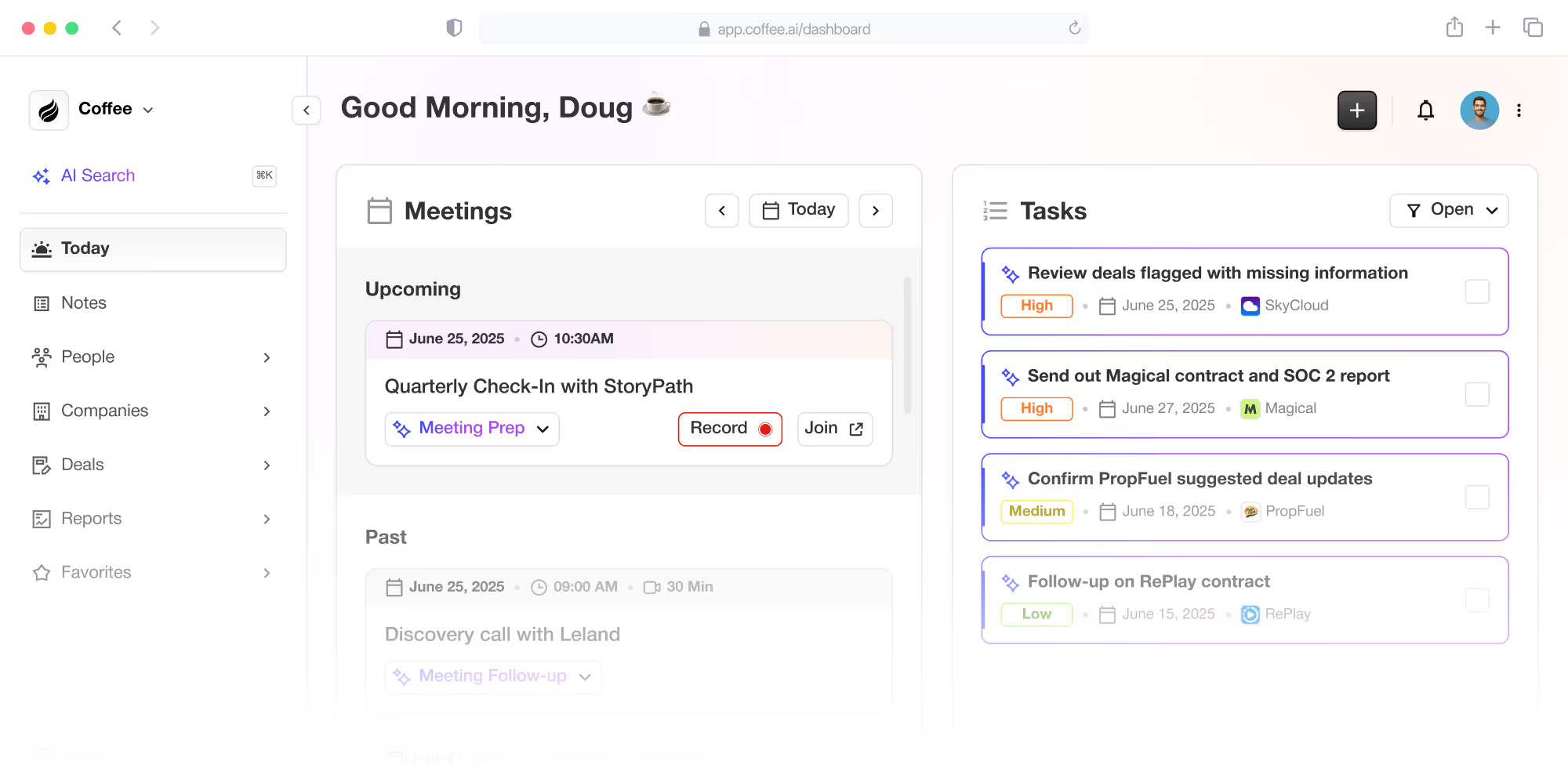
As part of the growing wave of AI-first solutions, Coffee offers a fresh approach to CRM technology by building automation into every layer of the sales process. Unlike traditional systems that may retrofit AI as an afterthought, Coffee embeds it natively to tackle inefficiencies head-on. It’s available as a standalone CRM for smaller businesses or as a Companion App that works alongside existing Salesforce or HubSpot setups, making it a flexible option for teams at any stage of their tech journey.
Coffee prioritizes the user experience for individual sales reps, not just management. By focusing on practical features that save time and reduce frustration, it shifts the perception of CRM from a chore to a valuable tool. This reflects the broader industry move toward technology that empowers frontline sellers with actionable insights and less busywork.
7 AI CRM Features to Save You Time
1. Automatic Data Entry and Enrichment
Coffee takes the pain out of data entry by automatically creating and updating records. Connect it to Google Workspace or Microsoft 365, and it scans emails and calendar events to build profiles for contacts and companies, complete with job titles, company details, and LinkedIn data. This cuts out hours of manual input and research, giving reps current information without extra effort.
- Saves an estimated 8-12 hours per week on data tasks.
- Frees up time for prospecting and closing deals.
2. Hands-Free Meeting Prep and Follow-Up
Preparing for meetings and following up afterward can take hours, but Coffee automates both. Before a call, it compiles briefings with attendee details, company background, and past interactions. During calls on platforms like Zoom or Teams, its AI bot records and transcribes conversations. After, it creates summaries based on sales frameworks like BANT or MEDDIC and drafts follow-up emails ready to send from Gmail.
- Cuts down manual prep and follow-up time significantly.
- Ensures consistent communication with minimal effort.
3. Real-Time Pipeline Insights
With Coffee’s Pipeline Compare feature, you can see week-over-week changes in your sales pipeline at a glance. It highlights new opportunities, progressed deals, and stalled prospects without requiring manual exports or spreadsheets, unlike many traditional CRMs. This instant visibility helps reps and managers focus on what needs attention right away.
- Turns pipeline reviews into quick, actionable steps.
- Eliminates time spent on manual data analysis.
4. Fast Prospect List Creation
Building prospect lists no longer means hours of research. Coffee’s AI lets you use natural language to define criteria, like “Find VPs of Sales in North American companies with 50-500 employees using Salesforce.” It generates targeted lists with full contact details, ready for outreach, streamlining a typically tedious process.
- Reduces lead research time dramatically.
- Allows focus on engaging prospects, not finding them.
5. Simplified Tech Stack Integration
Managing multiple sales tools often creates complexity, but Coffee combines key functions into one platform. It covers CRM, data enrichment, call recording, and pipeline analysis, reducing the need for separate subscriptions. This unified approach cuts costs, minimizes training, and ensures data flows smoothly across workflows.
- Lowers tech expenses and reduces context switching.
- Improves data accuracy with a single source of truth.
6. Effortless Activity Tracking
Coffee automatically logs activities from email and calendar data, keeping “last activity” and “next activity” fields current for every deal. Reps don’t need to update records manually after each interaction, so they can stay focused on engaging prospects instead of filling out forms.
- Saves time on routine updates.
- Ensures a complete view of interactions without extra work.
7. Easy-to-Use Interface for Quick Adoption
A steep learning curve can delay CRM benefits, but Coffee’s design focuses on simplicity and automation. It handles complex tasks in the background, letting reps concentrate on selling rather than navigating software. New users can get up to speed fast and start contributing sooner.
- Shortens onboarding time for teams.
- Boosts productivity from day one.
Comparing Time Savings: Coffee vs. Traditional CRMs
How Much Time Can You Reclaim?
|
Task |
Traditional CRM Time |
Coffee AI CRM Time |
Time Saved per Week (Estimated) |
|
Data Entry & Enrichment |
10 hours |
2 hours |
8 hours |
|
Meeting Prep & Follow-Up |
5 hours |
1 hour |
4 hours |
|
Pipeline Updates & Reporting |
4 hours |
0.5 hours |
3.5 hours |
|
Prospect List Building |
6 hours |
1 hour |
5 hours |
This table shows how Coffee can reduce time spent on administrative tasks compared to older CRM systems. By automating data-heavy processes, it allows sales reps to shift their energy to high-value activities like connecting with prospects and finalizing deals. Over time, these savings add up, creating more opportunities for revenue growth.
Ready to see the difference for yourself? Request access to Coffee and start saving time today.
Key Questions About AI CRM Features
How Much Time Can Sales Reps Save With AI CRM Tools?
Using a platform like Coffee, sales reps might save 8-12 hours per week compared to traditional systems. This comes from automating data entry, meeting prep, pipeline tracking, and prospect research. Actual results depend on your current processes, but the potential to redirect time toward selling is substantial.
How Does Coffee’s Data Enrichment Compare to Tools Like ZoomInfo?
Coffee’s built-in enrichment pulls detailed prospect information, such as contact data and company funding status, directly into the platform. Unlike standalone tools, it integrates this data into daily email and calendar workflows, reducing the need for separate subscriptions and minimizing workflow interruptions.
Does Coffee Work With Existing HubSpot or Salesforce Systems?
Yes, Coffee offers flexibility with two options. Its Companion App enhances your current HubSpot or Salesforce setup by syncing data and adding AI insights without disrupting workflows. Alternatively, the standalone CRM serves as a full replacement for teams looking to move to an AI-first system.
What Security Standards Does Coffee Follow?
Coffee adheres to strict security protocols, including SOC 2 Type 2 certification and GDPR compliance. It undergoes regular assessments to protect sensitive sales data and maintain customer privacy, meeting enterprise-level standards for data protection.
How Soon Can Teams See Productivity Improvements?
Many teams notice gains within the first week of using Coffee. Connecting email and calendar accounts triggers instant contact creation and data enrichment. Features like meeting summaries and pipeline insights start delivering value quickly, with full impact often visible within a few weeks as workflows adjust.
Conclusion: Spend More Time Selling With AI CRM
The AI CRM features discussed here address major time drains that sales reps face every day. Automation for data entry, meeting workflows, pipeline tracking, and more can shift your focus back to building relationships and closing deals. Sales teams using automation save an average of 5 hours per week, and tools like Coffee aim to push those savings even further with comprehensive, user-focused design.
For sales organizations, the decision is whether to continue with time-heavy traditional systems or adopt AI-driven solutions that prioritize efficiency. Coffee, as a leading example of this trend, offers tangible benefits through its standalone platform or as an enhancement to existing Salesforce and HubSpot setups. It’s a practical way to access automation without overhauling your entire tech stack.
Interested in saving time and boosting your team’s output? Request access to Coffee AI CRM and see how it can change your sales process.