
In a rapidly shifting sales landscape, the interplay between buyers and sellers has taken center stage. With digital transformation accelerating across industries, customers now expect tailored, informed interactions at every step of their journey. Sales leaders must navigate this complex environment where data is abundant yet often fragmented, and where the ability to interpret and act on customer conversations can make or break a deal. Traditional tools are struggling to keep pace with these demands, creating a pressing need for innovative approaches. This guide explores how AI-driven CRM solutions address these challenges, offering sales teams a way to unify data, streamline processes, and gain deeper insights into buyer behavior. As part of this broader trend, platforms like Coffee are helping redefine how sales teams build relationships and drive results.
Why Buyer-Seller Interactions Matter More Than Ever
Buyer-seller interactions shape the success of every deal, and mastering them is now a core requirement for staying competitive. Modern customers expect sales reps to know their needs, anticipate challenges, and offer relevant solutions during every conversation. Failing to capture and analyze these interactions means missing out on key insights that influence outcomes.
Older CRM systems often fall short in this area. They rely on disjointed data sources, forcing reps to switch between tools for outreach, call recording, and updates. This scattered approach creates inefficiencies and gaps in understanding customer relationships.
Manual data entry adds another layer of difficulty. Sales reps spend a significant portion of their time logging notes and updating records instead of focusing on selling. Only about 35% of their week is dedicated to direct customer engagement, with the rest consumed by administrative tasks. These inefficiencies reduce productivity and lead to inconsistent data quality.
The sales landscape has shifted from simply tracking transactions to building proactive, informed relationships. This change demands tools that go beyond basic contact management, offering a clearer view of customer dynamics through advanced technology.
AI-powered CRM systems are stepping in to address these gaps. They bring together data from multiple touchpoints, automate repetitive tasks, and provide actionable insights. To see how this technology can reshape your approach, request access to explore modern solutions.
How Coffee Leverages AI for Better Buyer-Seller Insights
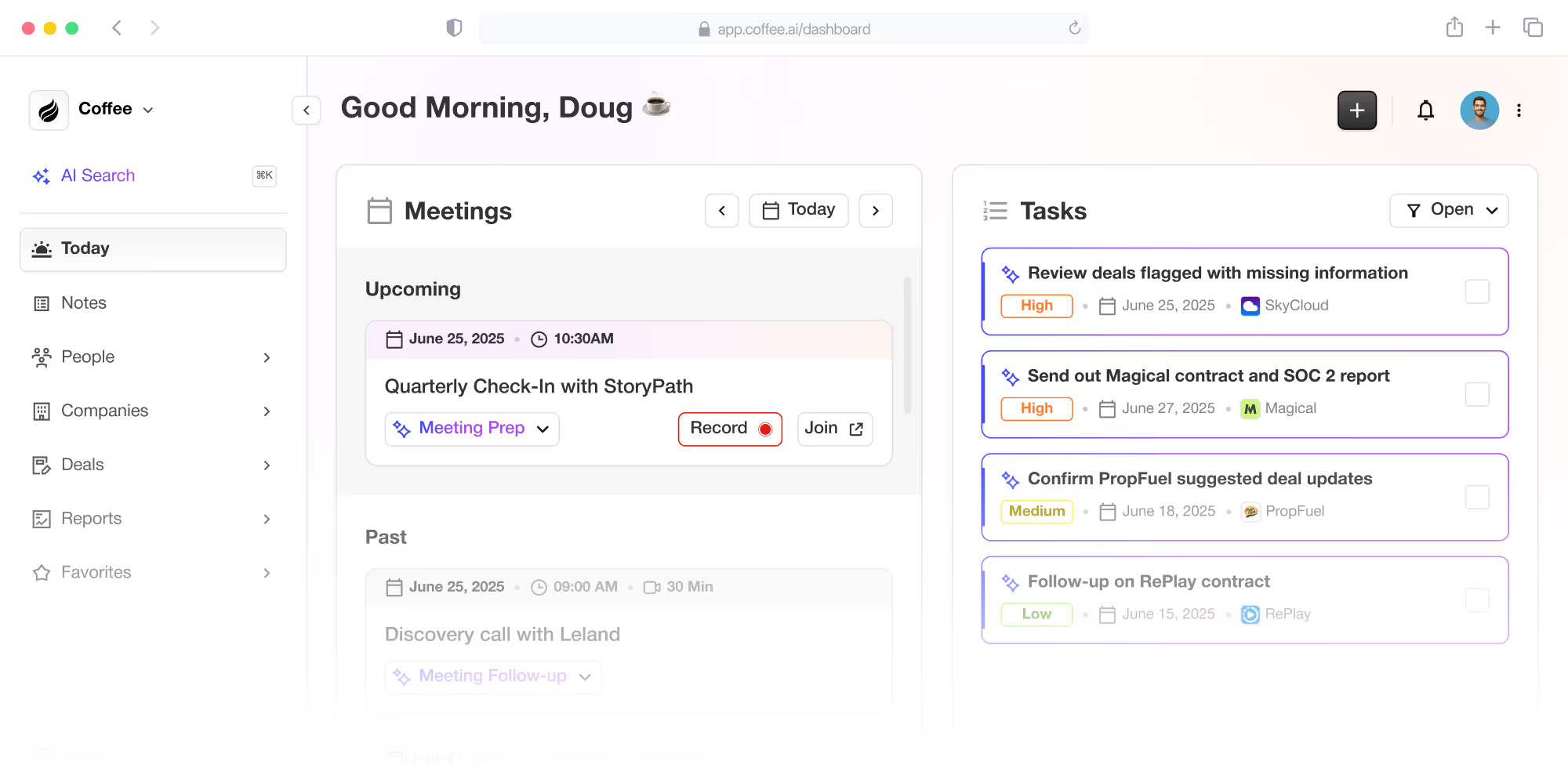
Coffee stands out as an example of how AI can enhance understanding of buyer-seller interactions. This platform integrates data from calls, emails, and meetings into one system, automatically turning conversations into usable insights. Instead of juggling separate tools, sales teams get a single hub that captures every detail of customer engagement.
One key feature is AI-driven meeting management. Coffee generates summaries, highlights action items, and drafts follow-up emails after each interaction. It also aligns with sales methodologies like BANT or MEDDIC, providing structure for qualifying deals. This reduces the need for manual note-taking, so reps can focus on connecting with buyers.
Data entry is another area where Coffee saves time. By connecting to Google Workspace or Microsoft 365, the platform automatically updates contact details, company information, and activity logs based on email and calendar activity. This cuts down on the 8 to 12 hours per week reps often spend on manual updates, keeping information accurate without added effort.
Coffee also offers a detailed look at pipeline health. Using historical data snapshots, its “Pipeline Compare” feature tracks changes week by week, showing which deals are moving forward, stalling, or closing. This turns pipeline reviews into focused strategy sessions instead of mere status updates.
By combining multiple tools into one system, Coffee simplifies the sales tech stack. Functions like call recording, forecasting, and data enrichment are built in, reducing costs and complexity compared to managing separate solutions.
This unified approach ensures that every interaction contributes to a fuller picture of customer relationships. To learn more about how Coffee applies AI to sales, request access and see the platform in action.
Key Strategies for Enhancing Buyer-Seller Interactions with AI CRM
Creating a Unified View of Customer Data
A complete picture of customer interactions starts with unified data. Coffee pulls together information from emails, calls, and meetings to build a full history of each relationship. This eliminates the silos found in older systems, giving sales teams instant access to the context they need for better decisions.
Streamlining Tasks with Automation
Automation plays a central role in freeing up time for meaningful engagement. Coffee handles repetitive work like data entry and meeting follow-ups, letting reps prioritize conversations over paperwork. This focus on efficiency helps teams build stronger connections with buyers.
Improving Productivity Across Sales Teams
By reducing administrative tasks, Coffee allows sales reps to spend more time on high-impact activities. Pre-meeting briefings provide relevant background, while post-call summaries outline next steps. This keeps reps prepared and ensures every interaction moves deals forward with minimal effort.
Planning for a Successful AI CRM Rollout
Implementing an AI CRM involves more than choosing the right software. Sales leaders need to consider how it fits into their organization and measure its impact over time. Viewing adoption as a shift in how teams work with data is critical to long-term success.
Start by assessing readiness. Look at the quality of existing data, the maturity of current sales processes, and the team’s openness to new tools. Leaders, including sales and operations heads, should agree on goals and metrics to track progress and ensure widespread use.
One common challenge is overlooking data quality. AI tools rely on clean, accurate information to deliver value. Ongoing efforts in training, data maintenance, and process updates are essential to get the most out of these systems.
Comparing Coffee to Traditional CRM Systems
Traditional CRMs often struggle to keep up with the demands of modern sales, while AI-driven platforms like Coffee are built for today’s relationship-focused environment. Here’s how they stack up across key areas.
| Feature / Aspect | Coffee’s AI CRM | Traditional CRM |
|---|---|---|
| Interaction Data | Combines structured and unstructured data from calls, emails | Focuses on structured data, limited with unstructured |
| Data Entry | Automated through AI based on interactions | Mostly manual for sales reps |
| Pipeline Insights | Active tracking with built-in comparison tools | Often reactive, may need extra software |
| Sales Experience | Designed for reps with intuitive support | Often seen as administrative work by reps |
Coffee focuses on easing the workload for sales reps and improving relationship quality. Many older systems face adoption issues because they feel like extra tasks for users. Coffee counters this with automation that delivers value from the start. To explore this difference for your team, request access today.
Common Questions About AI CRM
How Does Coffee Protect Data and Meet Compliance Standards?
Coffee adheres to strict security measures, including SOC 2 Type 2 and GDPR compliance. These standards ensure that customer data is safeguarded throughout every process, with privacy embedded into the platform’s design.
Can Coffee Work with Existing Sales Tools?
Coffee integrates smoothly with many systems. Its Companion App enhances current CRMs without requiring a full overhaul. Connections through Zapier and planned deeper integrations for later this year make it adaptable to various workflows.
What Value Does an AI CRM Like Coffee Provide?
The benefits of AI CRM include time saved on data entry and meeting prep, plus lower costs by replacing multiple tools with one system. Sales reps often gain back hours each week for direct selling, boosting overall productivity quickly after adoption.
How Soon Can Teams Benefit from Coffee’s Features?
Most users notice advantages within the first week, thanks to automated data updates and meeting summaries. Coffee’s user-friendly design and compatibility with tools like Google Workspace ensure quick setup and minimal training needs.
Conclusion: Elevating Buyer-Seller Relationships with AI CRM
In today’s sales world, understanding buyer-seller interactions is a key factor separating top performers from the rest. The complexity of customer journeys requires tools that can capture and act on every detail of those engagements.
As part of the growing trend toward AI in sales, Coffee offers a practical way for leaders to move past outdated systems. It unifies data and automates tasks, helping teams focus on building connections and closing deals.
Sales organizations that adopt AI tools to improve these interactions are better positioned to grow. Coffee provides a solid foundation for this shift, reducing administrative work while enhancing effectiveness. To see how AI can change your team’s approach, request access and experience the impact firsthand.