Written by: Doug Camplejohn, CEO & Co-Founder, Coffee | Last updated: July 18, 2026
Key Takeaways for Using BANT in 2026
- BANT is a four-criteria lead qualification framework (Budget, Authority, Need, Timeline) created by IBM in the 1960s to help reps quickly decide whether a prospect is worth pursuing.
- The framework works best for smaller deals under $25K ACV with short sales cycles and one or two stakeholders, so it fits high-volume inbound triage at the SDR stage.
- BANT struggles with complex enterprise deals involving more than five stakeholders and longer cycles, where frameworks like MEDDIC provide deeper qualification and stronger forecast accuracy.
- Even when reps ask strong BANT questions, manual data entry often leaves CRM records incomplete, which creates inaccurate forecasts and wasted effort.
- Coffee automates BANT data capture inside CRMs so reps can spend more time selling and less time on admin, see how Coffee automates BANT capture.
Four BANT Criteria with Practical Questions and Red Flags
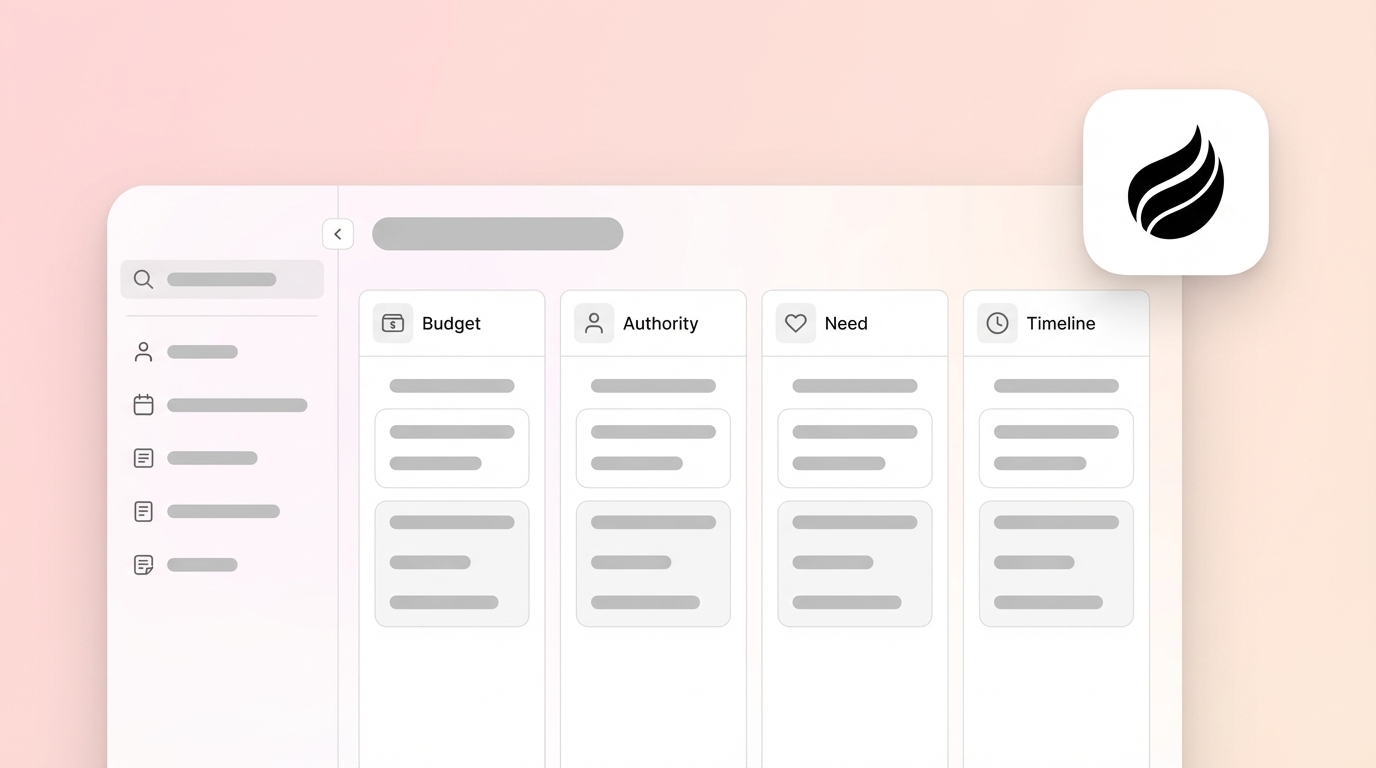
Each BANT criterion maps to a specific buying signal. The table below pairs each criterion with a core question and a red-flag response to watch for.
| Criterion | What It Qualifies | Example Question | Red-Flag Response |
|---|---|---|---|
| Budget | Whether the prospect has allocated funds or can create budget | “Have you allocated budget for solving this problem, or would that need to be created as part of the evaluation?” | “We haven’t thought about budget.” |
| Authority | Whether the contact can make or influence the purchase decision | “Walk me through how decisions like this typically get made at your company.” | “I’d have to ask around.” |
| Need | Whether there is an identified problem with sufficient urgency | “What happens to your team if this problem remains unsolved for the next twelve months?” | “We’re just exploring.” |
| Timeline | When the prospect plans to decide and implement | “Are there any business events or deadlines driving your timing?” | “Sometime next year, maybe.” |
Sales experts recommend avoiding blunt leading questions like “Do you have budget?” that can shut down conversations. Ask about funding mechanisms or investment ranges instead.
BANT vs MEDDIC for Different Deal Types
BANT and MEDDIC serve different deal environments. The table below compares them on dimensions that matter to RevOps and sales leaders.
| Dimension | BANT | MEDDIC |
|---|---|---|
| Criteria count | 4 (Budget, Authority, Need, Timing) | 6 (Metrics, Economic Buyer, Decision Criteria, Decision Process, Identify Pain, Champion) |
| Typical ACV fit | Sub-$25K | $25K–$100K+ |
| Typical cycle length | Minutes on a single call | Hours to weeks across multiple touches |
| Stakeholder model | Single buyer assumed | 5–10+ stakeholders mapped |
BANT focuses on how many deals a team can process, while MEDDIC focuses on how confidently a team can forecast the deals that matter. Many high-performing teams run a hybrid approach. They use BANT to triage inbound leads quickly, then graduate deals above a revenue threshold, such as $30K ACV or more than three stakeholders, to MEDDIC for deeper qualification.
Teams running MEDDIC at the AE layer book 25–30% higher close rates than teams running BANT in complex enterprise deals. That performance gap does not make BANT obsolete, but it does make the framework choice depend on deal complexity. Given these differences and the way B2B buying has evolved, teams now need to decide where BANT still fits in 2026.
Is BANT Outdated in 2026?
52% of sales professionals still find BANT reliable, with 41% valuing its flexibility and 36% using it specifically for timeline planning and forecasting. Yet this continued adoption exists alongside a major shift in the buying environment. Forrester’s 2024 State of Business Buying Report found that the average B2B purchase now involves 13 stakeholders, with 89% of decisions spanning multiple departments. This complexity directly challenges BANT’s single-buyer Authority criterion and creates tension between the framework’s simplicity and modern buying reality.
Opportunities qualified using structured frameworks like BANT demonstrate 15–28% higher win rates than those qualified without a systematic framework. The limitation does not sit in the four criteria themselves. The problem appears when teams treat them as a rigid four-question gate instead of a structured diagnostic conversation.
AI coaching research shows that diagnostic and coached approaches to BANT can produce substantially higher win rates than basic checklist methods. These findings point to a clear conclusion for 2026. BANT still works as a lightweight starter framework for SMB and mid-market deals, but its manual-entry burden makes it too rigid for enterprise unless an AI agent automates data capture inside the CRM.
BANT Sales Example from a SaaS Discovery Call
A RevOps lead at a 40-person SaaS company books a discovery call after downloading a whitepaper. The rep works through BANT in a natural conversation.

- Budget: “We have roughly $2K/month earmarked for tooling in this category, and the CFO approved it last quarter.”
- Authority: “I lead the evaluation, but the VP of Sales and our Head of Finance both sign off on anything above $1K/month.”
- Need: “Manual data entry is eating 10+ hours a week across the team, and our pipeline data is unreliable going into board reviews.”
- Timeline: “We need something live before Q4 planning, which is eight weeks out.”
Every answer looks like a green flag. After the call, the rep still has to log four separate fields in the CRM, draft a follow-up summary, and update the opportunity stage before the next meeting. Sales reps spend 71% of their time on administrative work, data entry, and preparation, leaving only 29% for selling. The qualification framework worked, but the data entry process did not. This example highlights both BANT’s diagnostic strength and its practical weakness, which sets up the question of when teams should rely on BANT and when they should choose a different framework.
When BANT Fits Your Sales Motion
The right qualification framework depends on deal size, cycle length, and stakeholder count. Use the checklist below to decide where BANT fits.
Use BANT when:
- Deal ACV is sub-$25K with 1–2 stakeholders and a sub-30-day cycle
- You are triaging high-volume inbound leads at the SDR stage
- New reps need fast ramping without extensive training
- The product is familiar to the buyer and the buying process is straightforward
Avoid BANT as your primary framework when:
- Deal ACV exceeds $100K with 5+ stakeholders and a 6–12 month cycle
- The deal involves formal RFP, procurement, legal, or security review processes
- The average B2B deal involves 11 stakeholders and consensus-building is required
- Forecast accuracy is the top priority, so those deals should graduate to MEDDIC
Many top-performing B2B teams use a hybrid qualification approach with BANT for early triage and MEDDIC for deeper enterprise deal management.
How AI Agents Capture BANT Automatically in Your CRM
The core problem with BANT in practice does not come from the framework. The real issue comes from the manual labor required to capture and structure the four criteria after every interaction. This burden exists because legacy CRMs like Salesforce and HubSpot rely on reps to log Budget, Authority, Need, and Timeline data by hand after each call. When reps skip or rush that step under time pressure, the CRM produces incomplete BANT data and inaccurate forecasts, which breaks the promise of systematic qualification.
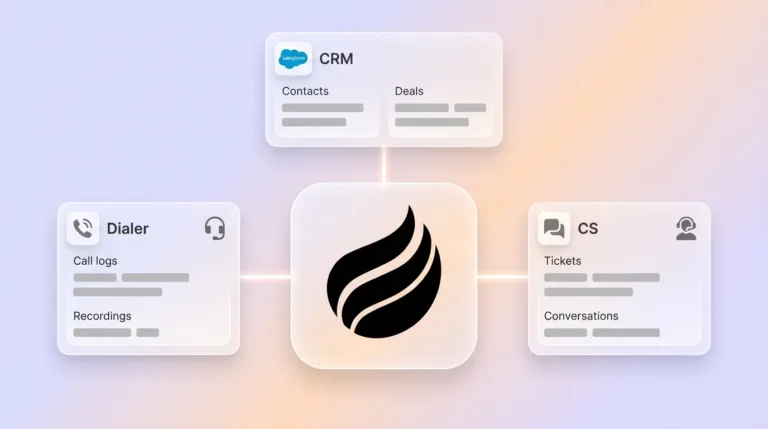
Coffee solves this at the source. The Coffee Agent connects to Google Workspace or Microsoft 365 and immediately begins ingesting emails, calendar events, and call transcripts. It structures that unstructured data by creating and enriching contacts, logging activity, and populating BANT fields without any rep effort. After each call, the agent generates summaries, identifies next steps, and drafts follow-up emails, all tagged to the correct opportunity record.

For teams already on Salesforce or HubSpot, Coffee deploys as a Companion App. A simple authentication allows the agent to sync data, enrich it, and write BANT-structured insights back to the primary CRM. AI-driven qualification that captures all four BANT signals produces booking rates of roughly 29%, versus under 1% for accounts that skipped or front-loaded qualification. Coffee’s agent delivers that consistency without adding a single manual step for the rep.

Teams using AI for lead qualification report 30–40% reductions in initial qualification time alongside 20–30% higher conversion rates. Coffee’s agent applies the same principle across every deal in the pipeline, not just the ones a rep remembered to update. Whether you automate BANT capture or run it manually, you still need a consistent scoring system to separate qualified opportunities from tire-kickers.
Simple BANT Qualification Checklist You Can Copy
Use this checklist to score any inbound opportunity. Each criterion scores 0–3 points for a maximum of 12. Scores of 9–12 indicate a fully qualified opportunity, 6–8 are partially qualified, and below 6 should be nurtured or disqualified.
Budget (0–3)
- 0 — No budget discussion; prospect unaware of cost
- 1 — Budget exists but is unallocated or requires new approval
- 2 — Budget range confirmed; approval process identified
- 3 — Budget approved and allocated for this initiative
Authority (0–3)
- 0 — Contact has no influence over the decision
- 1 — Influencer only; decision-maker not yet identified
- 2 — Decision-maker identified and engaged indirectly
- 3 — Decision-maker or buying committee directly engaged
Need (0–3)
- 0 — No defined problem; purely exploratory
- 1 — Problem acknowledged but low urgency or impact
- 2 — Clear problem with quantified business impact
- 3 — Urgent, high-impact problem tied to a strategic initiative
Timeline (0–3)
- 0 — No timeline; “someday” response
- 1 — Vague timeline with no driving event
- 2 — General quarter identified; some internal milestones known
- 3 — Specific implementation date tied to a concrete business event
Frequently Asked Questions
How long does it take to implement BANT inside a CRM?
Teams using a legacy CRM manually usually start by adding four custom fields to the Lead or Opportunity object and training reps to populate them after each discovery call. That setup takes a day or two. Adoption creates the real challenge, because reps often skip or partially complete BANT fields when call volume spikes. With Coffee, implementation becomes faster and more reliable. The agent connects to your email and calendar, begins capturing BANT signals from existing interactions immediately, and writes structured data back to Salesforce or HubSpot automatically. There is no field-by-field training burden because the agent handles the logging.
What are the most common objections to using BANT?
The most frequent objection is that BANT feels interrogative when teams apply it as a rigid four-question script. Prospects disengage when reps ask blunt budget questions before building trust. A second objection is that BANT under-qualifies complex deals by assuming a single decision-maker, which rarely exists in mid-market or enterprise buying committees. A third objection is that even when reps ask strong BANT questions, the answers often never reach the CRM reliably, which produces incomplete data and inaccurate forecasts. Treating BANT as a conversational diagnostic rather than a checklist addresses the first two objections. Automating data capture with an AI agent like Coffee addresses the third.
Does Coffee integrate with Salesforce and HubSpot?
Yes. Coffee operates in two modes. For teams already committed to Salesforce or HubSpot, Coffee deploys as a Companion App. A simple authentication allows the Coffee Agent to sync data, enrich records, and write BANT-structured insights, including meeting summaries, next steps, and qualification signals, back to the primary CRM without disrupting existing workflows, quotas, or required fields. For teams looking to replace their CRM entirely, Coffee also operates as a standalone AI-first CRM where the agent manages the full system of record.
Is Coffee SOC 2 and GDPR compliant?
Yes. Coffee is SOC 2 Type 2 certified and GDPR compliant. Data ingested by the Coffee Agent, including emails, call transcripts, and calendar data, is not used to train public models. For RevOps leaders evaluating AI tools in regulated or security-conscious environments, Coffee’s compliance posture means the agent can be deployed without a multi-year security review process. This makes it accessible to small and mid-market teams that need enterprise-grade data handling without enterprise-grade procurement overhead.
When should a team move from BANT to MEDDIC?
Deal complexity provides the clearest signal. When average deal ACV crosses $25K–$50K, buying committees grow beyond two or three stakeholders, or sales cycles extend past 90 days, BANT’s four criteria become necessary but insufficient. At that point, MEDDIC’s additional dimensions, such as Metrics, Economic Buyer, Decision Criteria, Decision Process, Identify Pain, and Champion, provide the depth needed for accurate forecasting and deal control. Many high-performing teams use BANT at the SDR stage for fast triage and then graduate qualified opportunities to MEDDIC at the AE discovery stage. Coffee supports both approaches. The agent can structure its call notes according to BANT, MEDDIC, or SPICED, which keeps qualification data consistent in the CRM regardless of the framework.
Conclusion: Start with BANT and Let Coffee Handle the Data
BANT remains the fastest qualification starter built for B2B sales. Its four criteria, Budget, Authority, Need, and Timeline, give any rep a structured lens for separating real opportunities from exploratory conversations in under five minutes. Companies that effectively implement BANT achieve a 59% increase in conversion rates, and 67% of lost B2B sales opportunities are directly attributable to sales reps not properly qualifying leads before pursuit.
The framework’s weakness has never been its logic. The real issue comes from the manual data entry burden that follows every qualifying conversation. When BANT answers live in a rep’s head instead of the CRM, forecasts break and pipeline reviews turn into interrogation sessions instead of strategic discussions.
Coffee’s agent closes that gap. It captures Budget, Authority, Need, and Timeline signals from emails, calls, and calendars automatically and writes clean, structured data into Salesforce, HubSpot, or Coffee’s own CRM without a single manual field entry. The result matches the promise BANT always made: good data in, good data out.
Start your free Coffee trial and automate your CRM data entry